
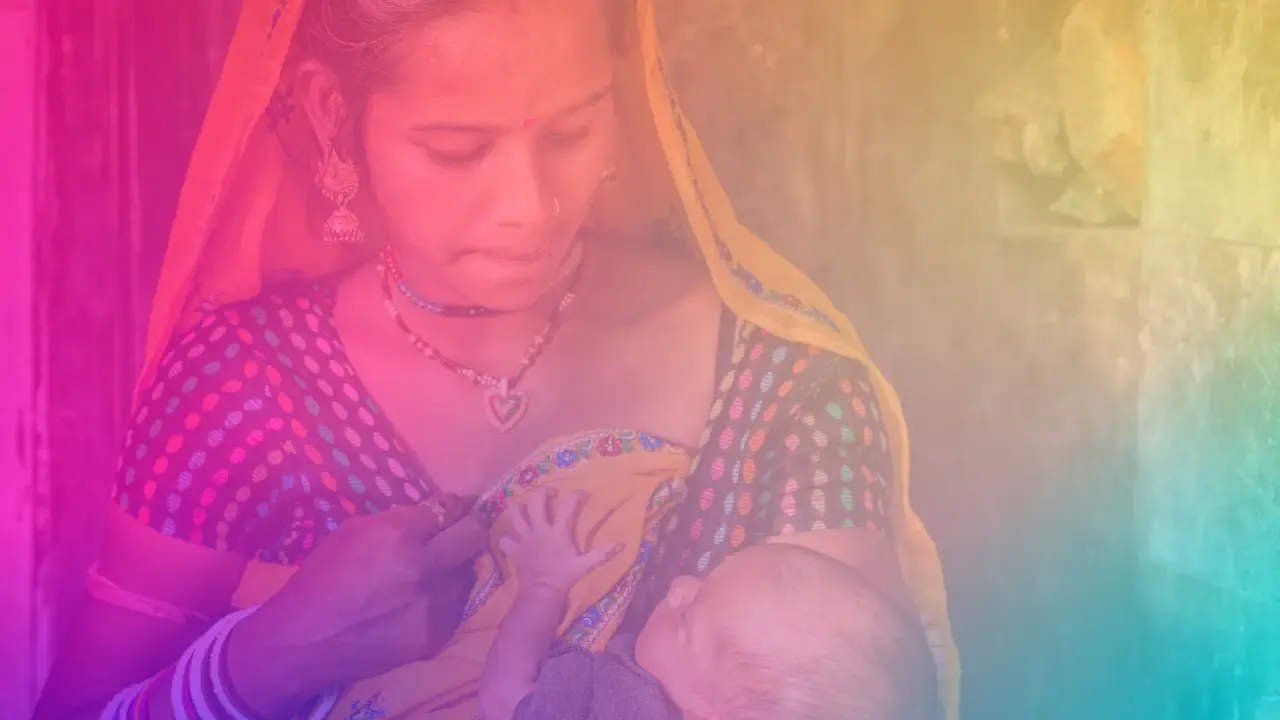
Article
The way Western culture treats new mothers is not normal
You have accepted the overwhelm, the guilt, the impossible pull between your baby and your career, as just how motherhood is. But what if everything you have been handed as normal about matrescence, the transformation of becoming a mother, is actually the greatest cultural failure of our time?
A few days after you gave birth, someone probably asked how the baby was sleeping
Not how you were sleeping. Not how you were healing. Not whether you were eating, or crying, or staring at the ceiling at 3am wondering who you were becoming. The baby. Always the baby.
And if you felt undone by early motherhood, exhausted in a way sleep could not fix, the load of the expectation to bounce back and show up weighing you down, you were probably told that this was normal. That every new mother feels this way. That you would find your feet soon.
What no one told you is that the way Western culture treats new mothers is not normal. It is, in fact, an anomaly in the entire history of human civilisation.
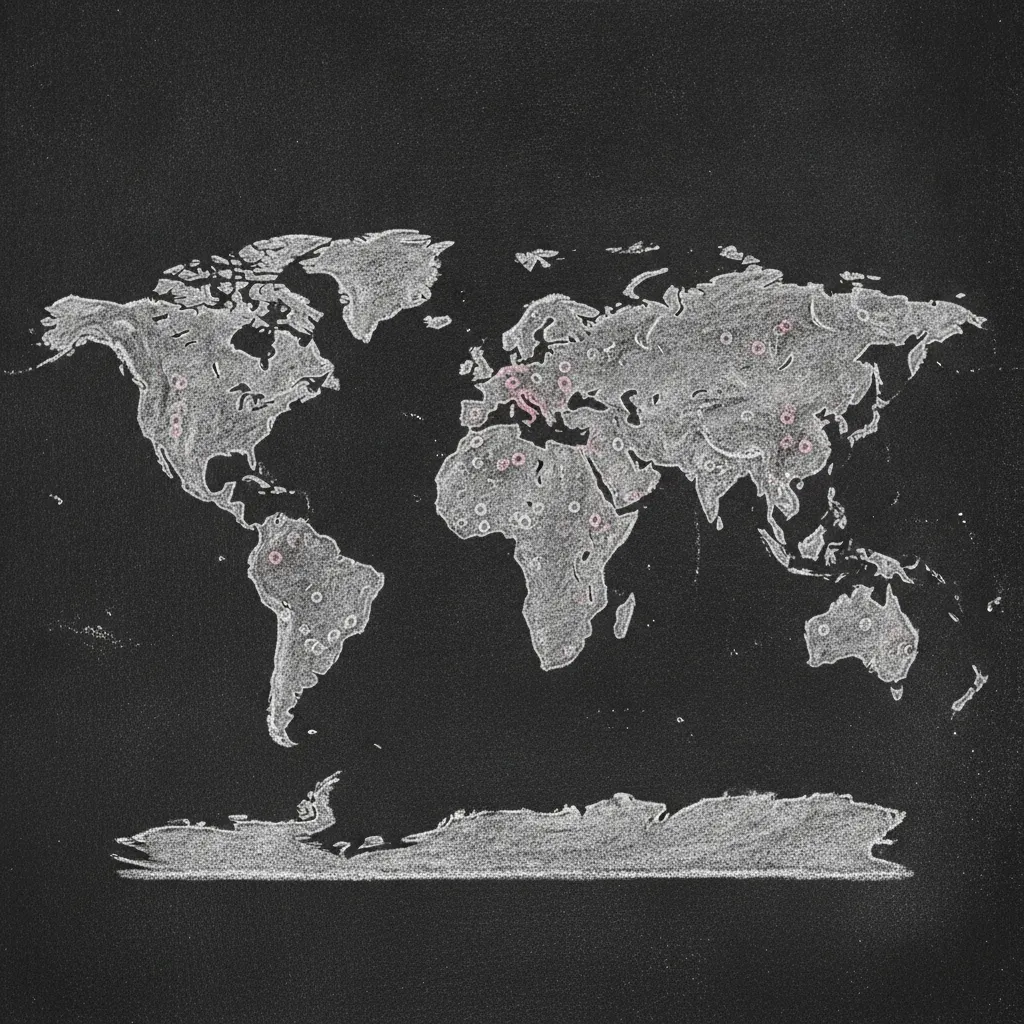
An anthropologist looked at 278 cultures
In the 1970s, American medical anthropologist Dana Raphael, trained at Columbia University under Margaret Mead, spent years studying the postpartum period across cultures around the world. She examined 278 anthropological reports.[1] What she found was remarkable not for its variety, but for its consistency.
Every culture had one.
Every culture she studied had rituals, rules, and a protected period specifically for the new mother. Not just for the birth, but for the transformation that came after. Periods ranging from weeks to months, during which the mother was cocooned, tended to, and released from all other responsibilities. During which the community’s explicit role was to ensure she could concentrate entirely on recovering and on becoming who she was becoming.
And then she looked at the West.
Nothing.
What the rest of the world still knows
The practices Raphael documented were not identical. They were shaped by climate, religion, food traditions, and geography. But they shared a profound philosophical agreement. That a woman who has just given birth is in a state of transformation, and that transformation requires protection.[5]
- NigeriaMonths
- India40 days
- Latin America40 days
- Morocco40 days
- China30 days
- JapanWeeks
- Korea21 days
- The WestNone
- NigeriaOmugwo
- The mother or mother-in-law moves into the home for months, performing all household tasks while the new mother heals. Warm-water stomach massages help the body recover. Spiced pepper soup and fermented porridge replenish what was lost.
- Indiachilla / jaapa
- A forty-day confinement during which the mother does not cook or clean, receives warm oil massages with herbal preparations, and is fed specific foods to restore her energy and support breastfeeding.
- Latin Americala cuarentena
- Forty days, the same word as quarantine, in which extended family moves in to cook, clean, and care for older children while the new mother rests. Described as an intergenerational family ritual that facilitates the transition to motherhood.
- Moroccoal-taqsan
- Forty days during which the new mother is cared for by her mother or mother-in-law, massaged daily, and fed foods specifically prepared to support healing and milk production.
- Chinazuo yuezi
- Sitting the month. Observed for over 2,000 years. The mother rests entirely for thirty days. All household duties are removed from her. A female relative or hired caregiver takes over cooking, cleaning, and infant care so the mother can focus solely on recovery and bonding. Nourishing soups are prepared to restore warmth and rebuild blood.
- Japansatogaeri bunben
- Homecoming birth. A pregnant woman returns to her parents' home in the late stages of pregnancy and remains there for weeks after giving birth, cared for by her own mother. The act of returning home is not seen as dependence. It is seen as restoration.
- Koreasanhujori
- Twenty-one days of warmth, nourishing food, and complete rest, during which outside visitors are sometimes not even permitted to see the baby, so the mother can heal without distraction or performance.
In culture after culture, the shape of the support differs. The commitment beneath it does not.
The West had it too. And then lost it.
This is the part of the story that matters most. The West was not always the exception.
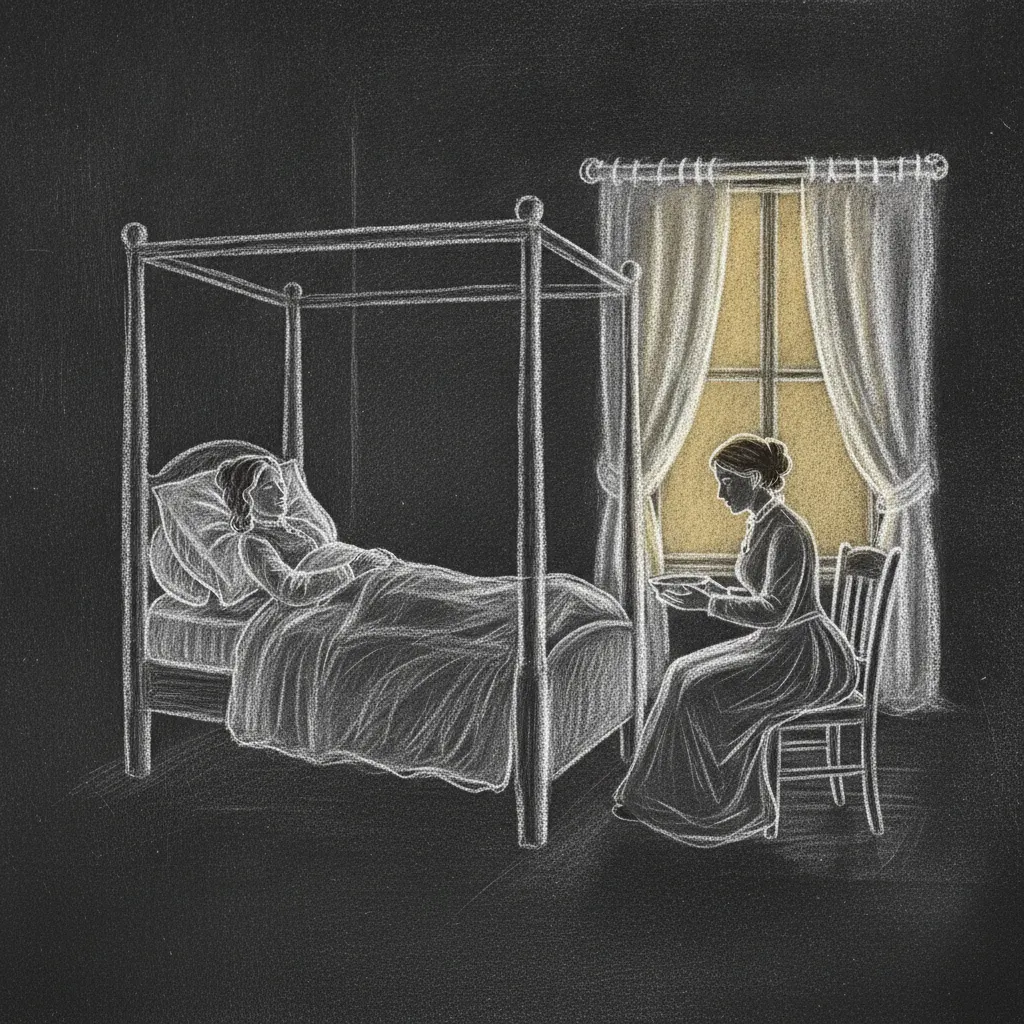
Until well into the twentieth century, Europe and North America had their own version of this protected period. It was called lying-in. Lasting anywhere from two weeks to two months, it was a designated time in which a new mother rested in her childbed, cared for by female relatives or a hired monthly nurse, and was exempted from all household and social duties.[6] The period ended with a formal ceremony, the churching of women, which publicly reintroduced her back into the community. It was a ritual with a beginning, a middle, and a marked ending.
In colonial America, the practice was sometimes called “doing the month.” Neighbours and extended family showed up. Food was brought. The mother was held.
So what happened?
Several forces dismantled it, largely invisibly, across about 150 years.
Industrialisation pulled families away from their ancestral communities and into cities, separating young mothers from the mothers, sisters, and neighbours who would have formed the fabric of their support. When you remove a woman from her village, the lying-in period collapses because the people who were meant to hold it are no longer there.
Medicalisation replaced ritual with procedure. The introduction of anaesthesia in the 1850s and antiseptic techniques that followed shifted cultural perception. Childbirth became a manageable medical event rather than a profound rite of passage requiring weeks of care. The domain of women and midwives became the domain of male physicians. And with that transfer came a loss. Not just of the practice, but of the understanding that underpinned it.
The language changed too. The protected postpartum period was once called the lying-in time. Today we call it the postpartum. A medical suffix, a secondary status, a period defined entirely in relation to what came before it. And poignantly, in common usage, the word postpartum has become almost synonymous with depression.
The ideology of productivity completed the work. What the Industrial Revolution began, the twentieth century cultural ideal of bouncing back finished. Getting back to normal became a marker of resilience. Needing time became a marker of weakness.
What was lost was not small
Dana Raphael understood that these rituals were not just about physical recovery. They were about the transformation itself. What she named matrescence. The process of becoming a mother. Neurological rewiring. The expansion of empathic intelligence. A profound shift in identity that, like adolescence, cannot be hurried through or skipped.
When the lying-in period disappeared, it did not just take away the rest. It took away the cultural acknowledgement that something extraordinary was happening. It took away the permission to not yet be okay. It took away the message that your community sees what you are going through, and has set aside everything else to be with you in it.
The letter we are not writing
Here is what breaks the heart.
Today, in a culture that gives a new mother almost nothing, she is often planning her return to work before her baby has even arrived. She is researching nursery spaces. She is calculating how many weeks she has before she needs to be functional again. Professional, coherent, present, back.
She is scheduling the end of something she has not even begun yet.
And underneath all of that planning is not calm preparation. It is fear.
Fear that if she takes too long, she will be forgotten. That her seat at the table will quietly be filled. She has watched it happen to other women. She knows how fast “she is on maternity leave” becomes “we went in a different direction.” She knows that careers narrow without permission, that she could come back to find herself sidelined, tolerated, managed out before she even realises it is happening.
She knows that in the eyes of the world she has built her life in, her worth is measured in her output. And she just became someone who cannot output anything except love, attention, and presence.
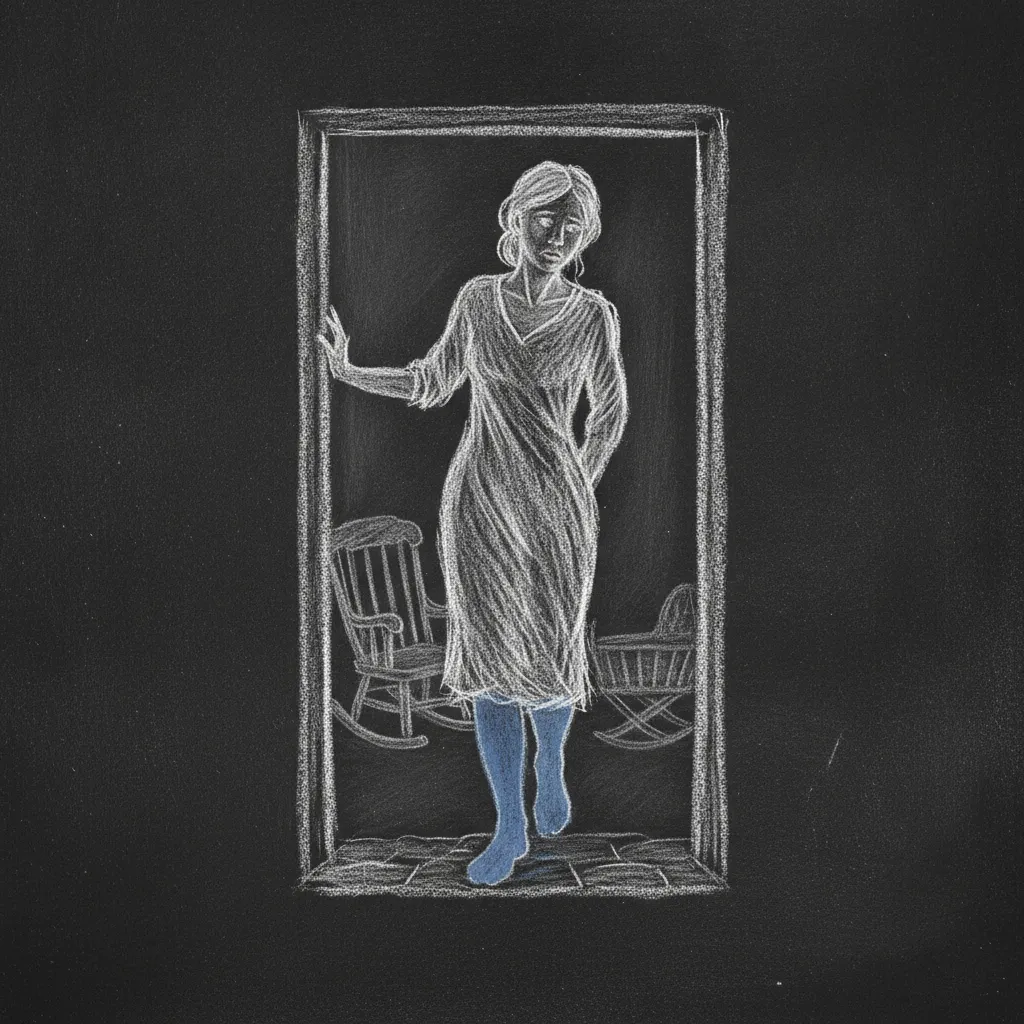
So she plans her return before she has held her baby through a single night. And that constant undercurrent of fear, of disappearing, of becoming less, is one of the things that stops her from fully stepping into motherhood. She stands with one foot in and one foot already pointed toward the door.
She does not know, in those weeks before the birth, what is about to happen to her. She does not yet know that she will fall open. That she will love in a way that terrifies her. That there will be nights when she sits in the dark with this small person and feels everything. Grief and wonder and exhaustion and a tenderness that has no language, all at once.
She does not yet know that she needs time. Not just to recover. But to meet herself.
Every year, millions of women pay the price of that forgetting. Not understanding why they feel like they are drifting, so unprepared, so alone in something so ancient. Not understanding that their anxiety is not a personal failing. It is the entirely rational response to a culture that never built the container they needed.
Frequently asked questions
What is matrescence?
The developmental transition of becoming a mother. Neurological, hormonal, psychological, and identity-level. Coined in 1973 by anthropologist Dana Raphael. Researchers now compare its scale to adolescence.
Why is postpartum care in the West so different from the rest of the world?
Because we dismantled the tradition we used to have. The lying-in period, two to eight weeks of rest with the mother tended to by female relatives, was standard across Europe and North America into the twentieth century. Industrialisation separated women from their villages, medicalisation replaced ritual with procedure, and the ideology of productivity finished the work. What the rest of the world still has, we forgot.
What was the lying-in period?
A designated protected period after birth, lasting anywhere from two weeks to two months, during which a new mother rested in her childbed. She was cared for by female relatives or a hired monthly nurse, and was exempted from household and social duties. The period ended with a formal ceremony, the churching of women, which publicly reintroduced her to the community. It was a ritual with a beginning, a middle, and a marked ending.
What is zuo yuezi?
Sitting the month. A Chinese postpartum tradition, over 2,000 years old. The mother rests entirely for 30 days. All household duties are removed. A female relative or hired caregiver takes over cooking, cleaning, and infant care so the mother can focus on recovery and bonding. Nourishing soups restore warmth and rebuild blood.
Is la cuarentena the same as quarantine?
The word is the same, but the meaning is closer to a protective enclosure than to isolation. In Latin American tradition, la cuarentena is forty days during which extended family moves in to cook, clean, and care for older children while the new mother rests. It is described as an intergenerational family ritual that facilitates the transition to motherhood.
Sources and further reading
- 01 (1973). The Tender Gift. Breastfeeding. Prentice-Hall.
- 02 (1975). Matrescence, becoming a mother. A new/old rite de passage. In Being Female. Reproduction, Power and Change. Mouton.
- 03 (1981). The midwife as doula. A guide to mothering the mother. Journal of Nurse-Midwifery, 26(6), 13-15. Link
- 04 (2015). Maternal psychology. Reflections on the 20th anniversary of Dana Raphael's passing. Psychology of Women Quarterly, 39(2).
- 05 (2007). Traditional postpartum practices and rituals. A qualitative systematic review. Women's Health, 3(4), 487-502. Link
- 06 (1986). Brought to Bed. Childbearing in America, 1750-1950. Oxford University Press.
- 07 (2017). A new way to think about the transition to motherhood. TED. Link
- 08 (2013). WHO recommendations on postnatal care of the mother and newborn. WHO. Link
Keep reading

How capitalism rewired the way mothers feed
Before we can talk about why breastfeeding is hard, we need to talk about who made it that way, and why. The guilt was never yours to carry.

Depleted mother syndrome and mum burnout: signs, causes and recovery
Depleted mother syndrome is not a diagnosis, but the exhaustion is real. The signs, how it differs from postnatal depression, and what actually helps.