

Article
Mum brain: is it real, how long does it last, and what actually happens
I need to tell you about the walk.
The walk that made me want to dissolve into the pavement, cancel all social obligations indefinitely, and never open my mouth in public again.
The walk. Three months postpartum.
I had my baby strapped to my chest in a wrap. One of those wraps that, in theory, takes forty-five seconds and, in practice, requires a YouTube tutorial and a small ceremony. We were on a “catch-up walk” with a friend. A friend who arrived looking glossy-haired, fresh-faced, and entirely like a person who had slept recently. She was wonderful. I was, technically, upright.
And then she asked me something. Something normal. Something conversational. The kind of question I would have answered effortlessly six months before, on any given Tuesday, probably while multitasking.
I opened my mouth.
And I had an out-of-body experience. I could literally see myself from slightly above. Baby in wrap, muslin draped over one shoulder, and I was cringing at every single sentence that came out of my own mouth. I was mumbling. I was circling. I started a thought and lost it halfway through. I reached for a word, a perfectly ordinary word, the kind I had used ten thousand times and it simply was not there. Gone. I watched myself fill the gap with a vague hand gesture and a noise that was not quite a word.
My God, I thought, watching myself from above. How have I become so ineloquent?
I walked home. I replayed every sentence. I spiralled quietly. And I made myself a solemn, slightly unhinged vow. I was going to become a hermit. No more social contact until further notice. Possibly ever.
If you are a mother, especially if you are a high-performing woman who has spent years being sharply articulate, quick-witted, and the person in the room who always has the right word, you know exactly what I am talking about. Not just forgetting where you put your keys. The deeper, more destabilising thing. The sense that your mind, your actual mind, has been replaced with something warm and formless.
Scientists have a name for it. And when I learned what was really happening, everything changed.
Why does nobody tell you about matrescence?
Matrescence is the process of becoming a mother. That is the simple version. The fuller version is this. It is one of the most significant neurological, psychological, hormonal, and identity-level transitions a human being can undergo, and it has been largely invisible in mainstream culture for fifty years.
The term was coined in 1973 by medical anthropologist Dana Raphael, the same woman who gave us the word “doula.” It describes a transformation as fundamental as adolescence. The same scale of brain rewiring, hormonal upheaval, and identity restructuring that we readily excuse in teenagers, happening to adult women, with essentially no cultural acknowledgement and even less support.
“Everyone knows adolescents are uncomfortable and awkward because they are going through extreme mental and bodily changes. But when they have a baby, women are expected to transition with ease. To breeze into a completely new self at one of the most perilous and sensitive times in the life course.”
Lucy Jones, Matrescence (2023)
Sixty-seven per cent of mothers have never heard the word matrescence. Which means millions of women are going through one of the most significant transitions of their lives without the language to name it, and, as a consequence, pathologising an entirely normal developmental experience as personal failure.
The fuzzy brain. The lost words. The out-of-body cringe on a walk with a friend. These are not signs that something has gone wrong. They are signs that something enormous is happening.
The goo stage. You are mid-metamorphosis.
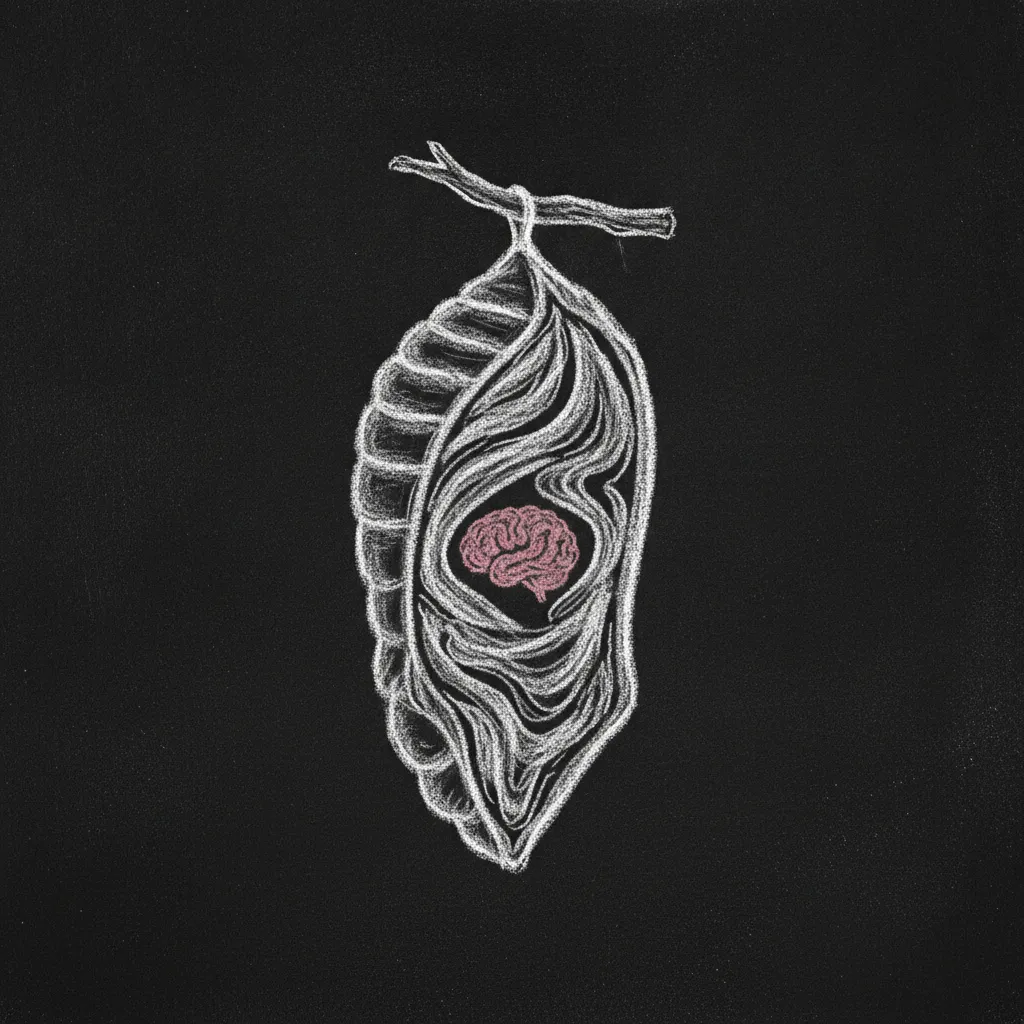
Researchers and developmental psychologists have started describing the postpartum period as a liminal “mush” or goo stage. A chrysalis moment in which you are neither completely the person you were before, nor yet settled into the person you are becoming.
You are, in the most accurate and scientifically grounded sense, mid-metamorphosis. And metamorphosis, as any caterpillar could tell you, is not tidy. Inside the cocoon, the caterpillar does not neatly reorganise. It dissolves. It becomes liquid. And from that goo, something entirely new assembles itself.
The postpartum brain fog, the mum brain, the mumnesia, the lost words on a perfectly ordinary walk. These are the goo. This is what reorganisation feels like from the inside.
The neuroscience of postpartum brain fog
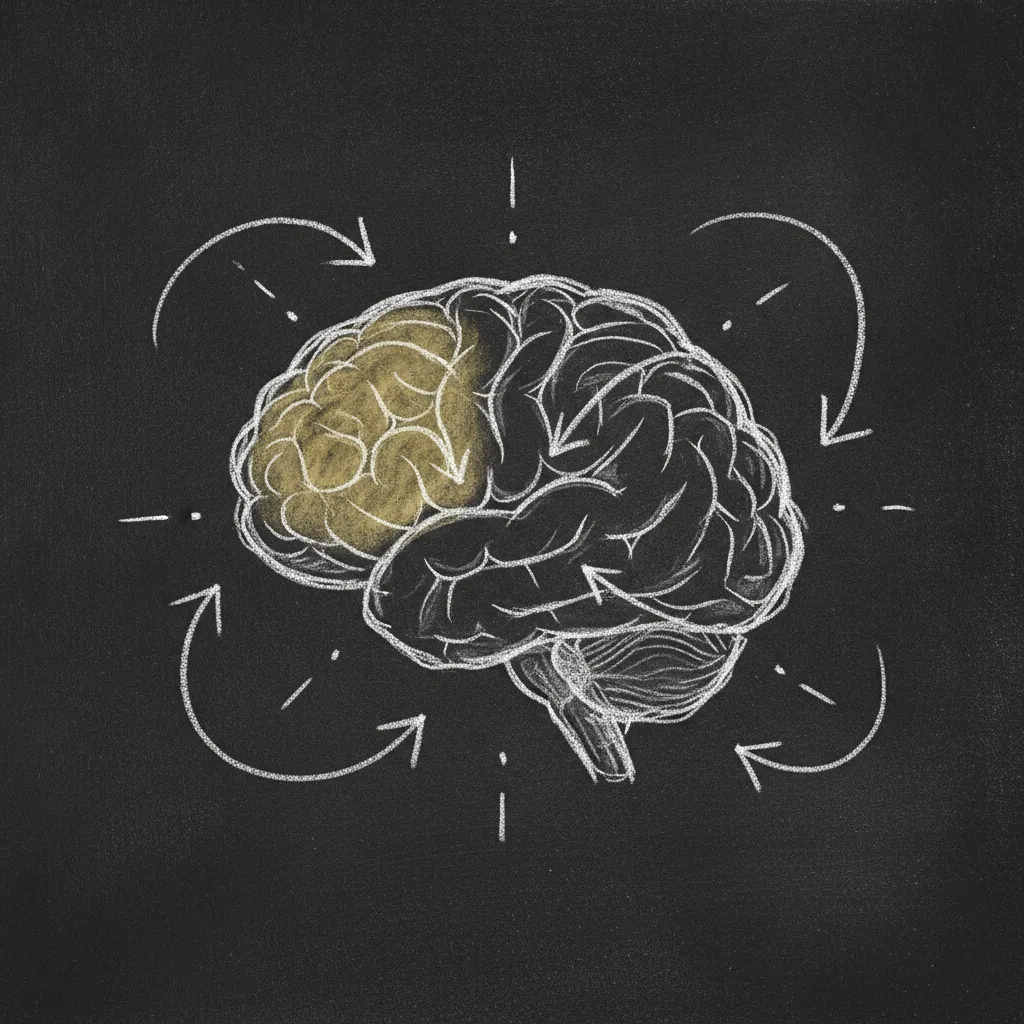
In 2017, neuroscientist Dr Elseline Hoekzema and her team published landmark research in Nature Neuroscience demonstrating for the first time that pregnancy causes significant, measurable, long-lasting changes to grey matter in the maternal brain. Specifically in regions governing social cognition, empathy, and threat detection. These changes persisted for at least two years postpartum. The researchers found that the brain was not deteriorating. It was specialising. Pruning and reorganising with extraordinary precision.[1]
A 2023 review in Trends in Cognitive Sciences further established that matrescence represents a distinct window of large-scale neurological reorganisation. The same kind of restructuring last seen in early childhood and adolescence, with long-term consequences that persist across the lifespan.[2]
What gets temporarily crowded out during this reorganisation? Verbal fluency. Word retrieval. The rapid-fire, linear thinking that served you so well before. These are the functions that surface as brain fog, mumnesia, the lost words on the walk. They are not signs of decline. They are signs of the brain redirecting resources while it restructures.
This is not you losing your edge. This is your edge being relocated. And the relocation, by its nature, is loudest while it is happening.
Why it hits high-performing women differently
Here is what I have come to understand about that walk, and about the vow I made at the end of it.
For women who have built a significant part of their identity on being sharp, articulate, quick, capable, the person in the room who always has the words, postpartum brain fog is not just inconvenient. It is identity-destabilising in a way that goes far deeper than ordinary forgetfulness.
Because it is not just the words that are temporarily gone. It is the version of yourself that you have relied on. The version that felt competent, coherent, and in command of a room. The version that would never have been caught mumbling on a walk, watching herself from above and cringing.
Reproductive psychiatrist Dr Alexandra Sacks describes matrescence as a time of profound ambivalence. The simultaneous experience of expansion and loss.[3] And she argues that without language for it, women pathologise normal developmental experience. They believe something is wrong with them when something is, in fact, deeply and powerfully right.
The loss of the sharp, eloquent, high-performing self, even temporarily, even in service of something extraordinary, is real grief. And it deserves to be named as grief. Not dismissed as baby brain. Not resolved by becoming a hermit.
What I know now that I did not know on that walk
Matrescence is not a phase you get through and emerge from unchanged, back to who you were. It is not a pause. It is not a detour. It is a permanent, irreversible, neurologically documented expansion of who you are. And the goo stage is simply the middle of it. The part that is loudest and most disorienting, because that is when the most significant restructuring is happening.
So if you are three months postpartum, baby in a wrap, cringing at yourself in a park, then I see you. I was you. And I want you to know. You are not losing your mind. You are mid-metamorphosis. You are in the goo.
And the goo, it turns out, is where extraordinary things are built.

Frequently asked questions
Is mum brain real?
Yes. Mum brain (or mom brain in the US) is real, and it is measurable. Brain scans show that pregnancy reshapes grey matter in the regions that handle social cognition and empathy, and the 2017 Hoekzema study found those changes still present two years after birth. The forgetfulness and lost words are the everyday feel of that rewiring. It is not imagined, and it is not decline.
What is mum brain, really?
It is the everyday name for a period of significant, measurable reorganisation of the maternal brain. Grey matter in regions governing social cognition, empathy, and threat detection is pruned and specialised. Verbal fluency and word retrieval are temporarily crowded out while the rewiring is underway. The 2017 Hoekzema study in Nature Neuroscience showed these changes persist for at least two years postpartum. It is not deterioration. It is specialisation.
How long does mum brain last?
The most disorienting phase tends to be the first year, but measurable neurological reorganisation continues for at least two years after birth. Broader cognitive and neural adaptations of motherhood have been shown to influence brain structure well into midlife and beyond. The acute fog lifts. The rewiring does not go backwards.
Is mum brain the same as matrescence?
Mum brain is one visible symptom of matrescence. Matrescence is the whole developmental transition, neurological, hormonal, and identity-level. Mum brain is what the cognitive part of that transition feels like from the inside while it is happening.
Will I lose my sharpness permanently?
No. What the research actually describes is a temporary crowding out of verbal fluency and linear thinking while the brain reorganises for greater social intelligence, empathic accuracy, and threat detection. Your edge is not gone. It is being redirected. The verbal fluency comes back as the acute reorganisation phase settles.
Why has nobody told me about matrescence?
Sixty-seven per cent of mothers have never heard the word. It was coined by anthropologist Dana Raphael in 1973 and largely dropped out of mainstream language until Alexandra Sacks reintroduced it in a 2017 New York Times piece. In the meantime, women have been pathologising a normal developmental transition as personal failure.
What is the goo stage of motherhood?
The liminal postpartum period in which a new mother is neither fully the person she was before having a baby, nor yet settled into her new self. Researchers describe it as chrysalis-like. A caterpillar dissolves inside its cocoon before restructuring into something new. The goo stage is not a breakdown. It is the necessary middle of becoming.
Why do I keep losing words after having a baby?
Because your brain is prioritising. During the postpartum period the regions that govern verbal fluency, working memory, and rapid retrieval are undergoing targeted restructuring. These functions are temporarily slower because cognitive resources are being redirected toward social cognition, threat detection, and empathic attunement. The words will come back. The expanded capacity is permanent.
Is losing your identity after having a baby normal?
Yes. Matrescence, by definition, involves a profound shift in identity. Dr Alexandra Sacks describes it as a time of deep ambivalence, the simultaneous experience of expansion and loss. You are gaining an entire new dimension of self while also grieving parts of the person you were. This is not a crisis. You are not losing yourself. You are outgrowing the previous version.
Does your brain go back to normal after having a baby?
Not back to normal. Forward to something new. The neurological changes of matrescence do not resolve back to a pre-pregnancy baseline. The maternal brain reorganises into a more sophisticated architecture, with lasting enhancements in empathic accuracy, social cognition, and threat detection. The acute cognitive disruptions of early postpartum are temporary. The underlying expansion of neural capacity is permanent.
What is the difference between postpartum depression and postpartum brain fog?
Postpartum brain fog is a neurologically normal part of the matrescence transition. Word loss, forgetfulness, difficulty concentrating. It is not a mental health condition and does not require clinical intervention. Postpartum depression is a clinical condition involving persistent low mood, loss of interest, feelings of worthlessness, and in some cases thoughts of self-harm. It affects around one in seven new mothers and requires proper support and often professional treatment. If what you are experiencing goes beyond fuzzy thinking into persistent darkness, hopelessness, or feeling unable to cope, please reach out to your doctor or midwife. The two can coexist, and both deserve to be taken seriously.
Sources and further reading
- 01 (2017). Pregnancy leads to long-lasting changes in human brain structure. Nature Neuroscience, 20(2), 287-296. Link
- 02 (2023). Matrescence. Lifetime impact of motherhood on cognition and the brain. Trends in Cognitive Sciences, 27(3), 302-316. Link
- 03 (2017). The birth of a mother. The New York Times. Link
- 04 (2023). Matrescence. On the metamorphosis of pregnancy, childbirth and motherhood. Allen Lane.
Keep reading

Depleted mother syndrome and mum burnout: signs, causes and recovery
Depleted mother syndrome is not a diagnosis, but the exhaustion is real. The signs, how it differs from postnatal depression, and what actually helps.

Postpartum rage: why it happens and how long it lasts
Sudden, intense anger after a baby is not a character flaw. Why postpartum rage happens, how long it lasts and when to speak to your doctor or midwife.