

Article
Postpartum rage: why it happens and how long it lasts
It is bath time. The water is too hot, the baby is screaming, and your partner calls out to ask where the clean towels are.
Something in you goes off like a smoke alarm. You shout. Louder than you meant to. Out of all proportion to a towel.
Afterwards the house is quiet, and you feel sick. Who was that? Later, in bed, you type two words into your phone. Postpartum rage.
Here is what I want you to notice. You searched for it. Part of you already knows this is not who you are. That instinct is worth trusting.
Rage after a baby is not a character flaw. It is often what matrescence, the normal developmental passage into motherhood, looks like under abnormal pressure: broken sleep, an unshared load, too little support. This post covers what it feels like, why it happens, how long it lasts, when to speak to your doctor or midwife, and what you can change this week.
What postpartum rage feels like
It rarely feels like ordinary irritation. It feels like being hijacked. One second you are coping. The next you are slamming a cupboard, or hissing at someone you love.
For some mums the anger goes outwards. For others it goes inwards, and sits in the chest all day. Both count. Mothers who talked to researchers about their anger after birth described both, along with a constant sense of being on edge.[1]
If several of these sound familiar, inform a doctor or midwife. Not as a confession. As information.
The shame is often the heaviest part. It pushes the anger underground, where nobody can help you with it. If the gap between love and fury is what frightens you, read about the conflicting emotions of motherhood. Feeling two opposite things about the same life is not a contradiction. It is ordinary.
So hold onto this. Anger does not make you a bad mum. It tells you that you are under pressure.
Is it real, and how common is it?
Yes, it is real. And you are not the only one, even if it feels that way at 3am.
Researchers in Canada asked mothers of babies aged six to twelve months about their anger. A striking share scored in the range the researchers class as intense anger.[2] Most of them were well-off and well educated, so treat the figure below as a signal, not a national rate.
You may see pages online saying postpartum rage affects 6.5 to 20 per cent of new parents. Look closely and that range describes postpartum depression, not rage. It has been borrowed from a different condition.
The studies in this article also come from North America and Europe. Whether the picture holds where you live is still unknown.
What does that mean for you? Whatever the exact number, you are not a rare case. You are a mum under strain, in good company.
Why it happens
Think about what your days hold. Feeds every few hours. Sleep in pieces. A body still healing. A list that never empties.
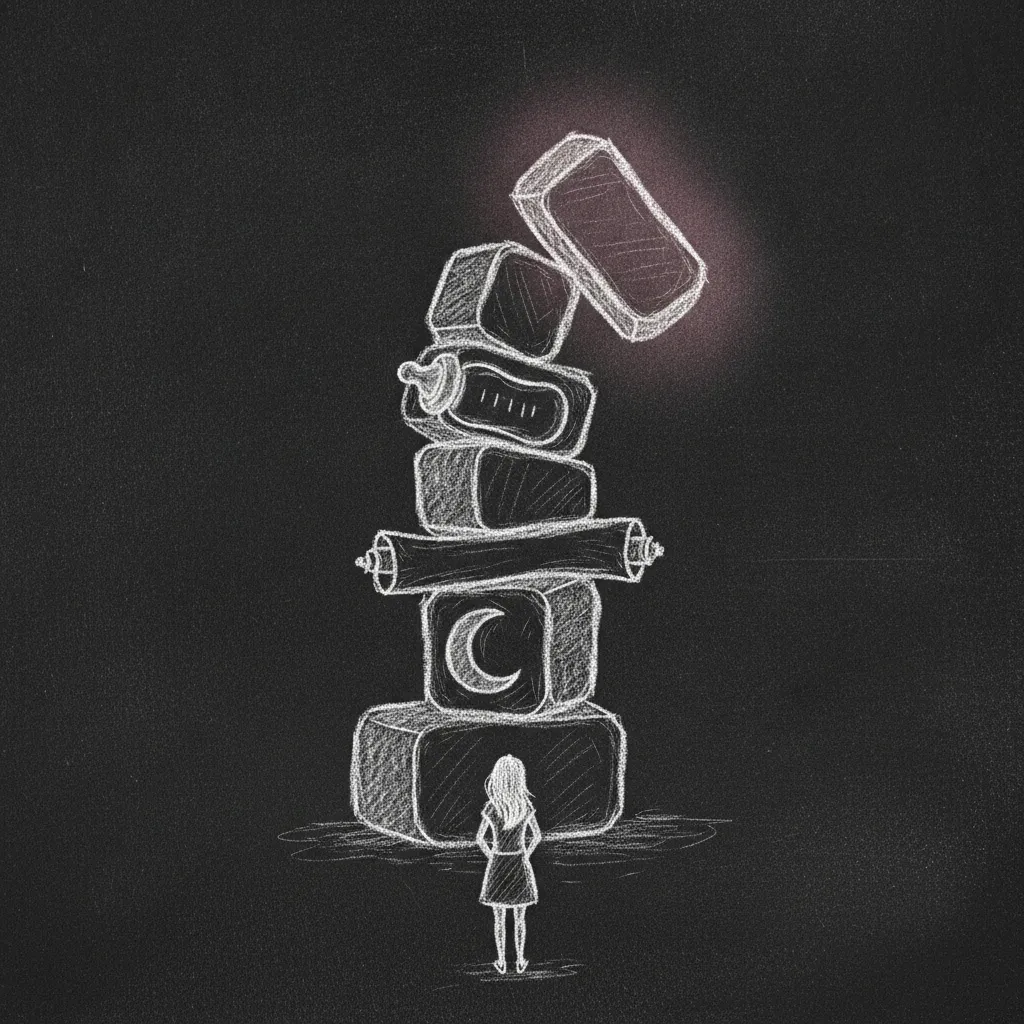
Rage rarely comes from one thing. It comes from a stack.
Sleep sits near the bottom of that stack. In one experiment, researchers cut adults’ sleep over two days. Their anger grew stronger, mostly because they were sleepier.[4] Those were adults in general, not new mums. But research with new mothers points the same way: poorer sleep tends to go with more anger.[2]
The load comes next. Among working couples, the gap in who does what tends to open after the baby arrives, and it lands mostly on the mother.[5] Support matters too. Parents who feel supported, and happier in their relationship, tend to report less anger and hostility later on.[6]
Hormones are part of the picture. Oestrogen and progesterone fall sharply in the hours after birth, and that drop has been linked to low mood afterwards.[7] If you want the fuller story, read what happens to your hormones after birth. But hormones are only one layer of the stack.
This is what I mean by a normal passage under abnormal pressure. You are changing in every way matrescence asks, on too little sleep, carrying too much alone.
Lost sleep, an uneven load, thin support, hormones in flux: not one of them is a character flaw.
If the anger sits on top of months of running on empty, read about depleted mother syndrome and mum burnout.
Why it so often lands on your partner
You hold it together all day. Then your partner walks in, or rolls over at 3am, and it all comes out at them. And you feel worse, because they are the person you most need on your side.
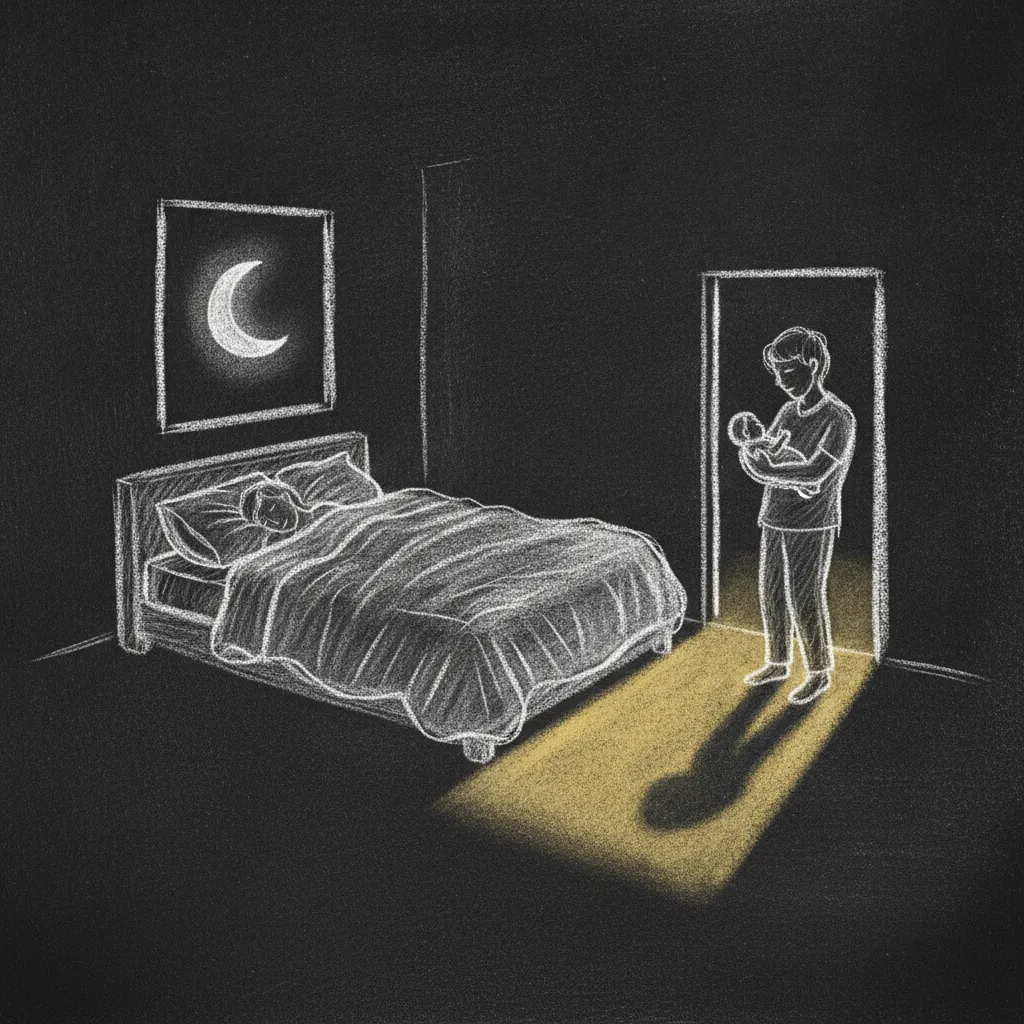
Researchers in Canada interviewed mothers who had reported high levels of anger after birth. Partners were a frequent target. One common trigger was night waking when the partner did not help. What eased it was practical: a partner taking the morning shift, or the couple alternating nights, so the mother could catch up on sleep.[1] It was a small group of mostly well-off mothers, so it is a strong lead rather than a settled finding.
Now look underneath. Many of those mothers had expected to share parenting. In practice, it stayed a highly gendered role.[1] So the anger is often not really about the towel or the dishwasher. It is about the gap between the plan you made together and the life you are actually living.
That does not make your partner the villain. They are going through a transition of their own, sometimes called patrescence. Look at the structure instead. Who gets up in the night. Who holds the list. Who gets to rest.
If the anger keeps landing in the same place, look at that place for the fix. A different rota may help you more than a promise to yourself to be calmer.
How long does it last?
There is no reliable date. No study has yet followed postpartum rage on its own, from start to finish. The clues so far suggest it often eases as sleep improves and pressure lifts. If it is not easing, that is your cue to get help.
What we have are clues. Researchers in Canada followed a large group of mothers from pregnancy to their baby’s first birthday, tracking anger, anxiety and low mood together.[8] For some, distress rose after the birth. For others, it eased. For a smaller group, it stayed high all year. Poor sleep, money worries and low support went with it rising. Better sleep and fewer money worries went with it easing. It also ran during the pandemic. It shows a pattern. It cannot predict your own year.
Two better-known markers help. In the first days after birth, the baby blues can bring anger at your baby, your partner or your other children, and they usually pass within a week or two.[7] Postnatal depression, which is far better studied, usually improves within three to six months. It can last much longer, and it is more likely to improve with treatment.[9]
So do not wait for a date. If your anger is not easing, is getting worse, or frightens you, speak to your doctor or midwife now. Not at six months. Not at a year. Now.
Is it depression or anxiety?
Sometimes the anger is the part of you that shows. Low mood or constant worry can sit underneath it.
Anger and low mood often travel together. A US study of low-income mothers found that anger frequently came alongside symptoms of depression, anxiety and trauma, but it was not simply the same thing as any of them.[3] Official health guidance lists feeling irritable among the signs of postnatal depression.[9] If more is going on underneath, you would not be unusual.
Here is the catch. You may never be asked about anger. In England, the first questions doctors are advised to ask around birth cover low mood, loss of interest and worry. None of them mentions anger.[10] Other countries use their own questions. Wherever you live, do not wait to be asked. Name it yourself.
You could say something like: “Since the baby, I have been getting really angry. More than irritable. It comes out of nowhere and I hate it. Can we talk about what might be behind it?” A doctor can talk you through the options.
Postpartum psychosis is different again. It is rare, it usually starts suddenly in the first weeks after birth, and it is a medical emergency.[11] If you or anyone else is in immediate danger, contact your local emergency services.
You do not need a label. You need someone qualified to hear the whole picture.
What helps
In short: step away safely, split the night, make the load visible, say the word “anger” to your doctor or midwife, and find your people. None of this is a cure. These are places to start this week.
1. Step away safely
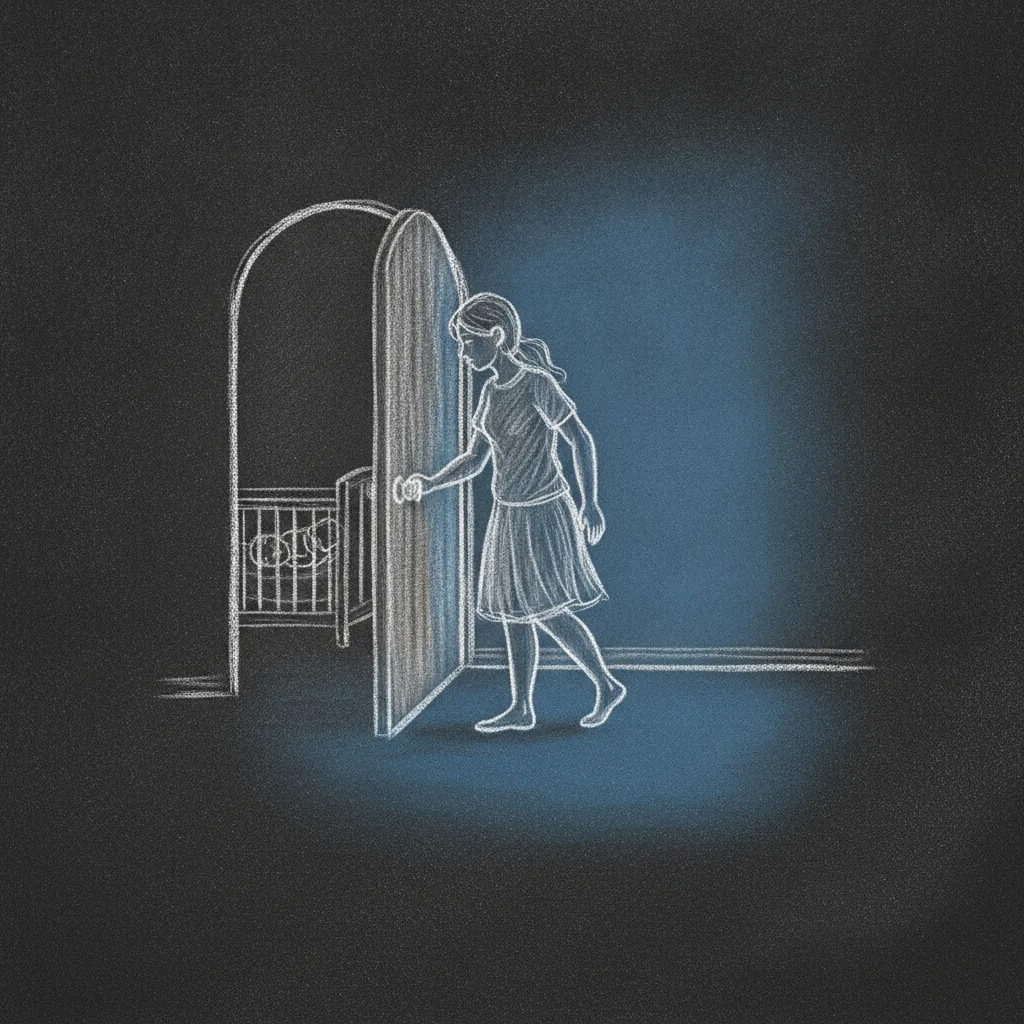
When you feel the surge, put distance between you and the trigger. If your baby is crying and nobody can take over, put them somewhere safe, such as their cot. Close the door, go into another room and wait until you have calmed down. Never shake a baby. UK guidance on crying babies says it plainly: “There may be times when you’re so tired and angry you feel like you cannot take any more. This happens to a lot of parents, so do not be ashamed to ask for help.”[12] You are allowed to leave the room.
2. Split the night
Of everything in this post, sleep has the strongest evidence behind it. If you have a partner, agree a shift pattern. One of you takes the early-morning shift, or you alternate nights. If you are breastfeeding, your partner can still take the settling, the nappy and the early start. Agree it tonight, not after the next blow-up.
3. Make the load visible
Much of what you carry cannot be seen. The appointments. The nappy order. What runs out next. Write it all down. Then hand over whole jobs, from start to finish, rather than asking for help with pieces. It is hard to share work that nobody else can see.
4. Say the word “anger”
At your next appointment, use the word itself. Not “a bit stressed”. Not “tired”. Anger.
5. Find your people
Support was one of the things that helped mothers in the research manage their anger.[1] That might be a friend who will not flinch, a relative who can take a shift, or a peer support group, in person or online. Saying it out loud to someone who has been there takes some of the shame away.
Which leaves a practical question. What is one thing that could change before the first wake-up tonight? A shift agreed. A job handed over. An appointment booked.
Change one thing tonight. Let the shame go with it.
Frequently asked questions
Is postpartum rage normal?
It is common and it is real, but common does not mean you should just put up with it. Researchers have found intense or problematic anger in a sizeable share of the mothers they studied. If it is happening often, tell your doctor or midwife.
How long does postpartum rage last?
Nobody knows yet. No study has tracked postpartum rage on its own over time. Research on related distress shows it eases for some mothers and lasts all year for others, especially when sleep, money and support stay strained. If it is not easing, speak to your doctor or midwife now rather than waiting.
Why am I so angry at my husband after having a baby?
Partners are a common target. Research with mothers points to night waking without help and an unshared load as frequent triggers. That makes it a question of structure, not of who is to blame. A fairer split of nights and jobs is a good place to start.
Is postpartum rage a sign of postpartum depression?
It can be, but not always. Anger often travels with depression and anxiety, and irritability is listed among the signs of postnatal depression. Because screening questions do not always ask about anger, use the word yourself with your doctor or midwife.
When does postpartum rage start?
There is no fixed starting point. Anger can show up in the first days after birth as part of the baby blues, which usually pass within a week or two. For some mothers it builds later in the first year, as sleep loss and load pile up.
How do I get rid of postpartum rage?
There is no quick fix, and no one step works for everyone. Start with what feeds it: protect sleep with a shift split, hand over whole jobs, step away safely when you feel the surge, and tell your doctor or midwife about the anger by name.
If you are struggling
This article is for information, not medical advice. Mags Salton is a mentor and coach, not a clinician. If you have felt low most days for more than two weeks, have thoughts of harming yourself or your baby, or feel you cannot cope, please speak to your doctor or midwife. If anyone is in immediate danger, contact your local emergency services.
Sources and further reading
- 01 (2022). Seeing red: a grounded theory study of women's anger after childbirth. Qualitative Health Research, 32(12), 1780-1794. Interviews with 18 mothers in Canada with high anger scores, babies aged 7 to 23 months; mostly white, well educated, higher income and all partnered. The authors note the findings are not transferable to mothers in general. Link
- 02 (2022). Correlates of Canadian mothers' anger during the postpartum period: a cross-sectional survey. BMC Pregnancy and Childbirth, 22, 163. Survey of 278 mothers of healthy 6 to 12-month-old babies, recruited online and in the community for a study advertised as about sleep; 31% scored in the intense-anger range. Sample mostly highly educated and financially secure, with low ethnic diversity; one time point only. Link
- 03 (2025). Postpartum anger among low-income women with high rates of trauma exposure. Journal of Traumatic Stress, 38(1), 124-134. 1,383 low-income mothers in a Wisconsin home-visiting programme; about 21% had problematic anger. Not generalisable beyond that population. Link
- 04 (2019). Sleepy anger: restricted sleep amplifies angry feelings. Journal of Experimental Psychology: General, 148(7), 1239-1250. Experiment with 142 community adults over two days; not a postpartum sample. Link
- 05 (2015). The production of inequality: the gender division of labor across the transition to parenthood. Journal of Marriage and Family, 77(3), 662-679. Time diaries from US dual-earner couples, mostly well educated, in one state. After the birth, mothers took on more than two extra hours of work a day; fathers about 40 extra minutes. Link
- 06 (2025). Parental relationship satisfaction, symptoms of depression and anger/hostility, and the moderating role of perceived social support: a prospective cohort study in the light of the COVID-19 pandemic. Frontiers in Psychology, 16, 1470241. German cohort of 1,414 mothers and 885 fathers; support and relationship satisfaction at 14 months predicted fewer symptoms at two years. An association, not proof of cause. Link
- 07 (n.d.). Postpartum depression (patient FAQ). ACOG. US guidance on the baby blues, postpartum depression and the hormone drop after birth. Link
- 08 (2025). Psychological distress in childbearing persons during the COVID-19 pandemic: a multi-trajectory study of anger, anxiety, and depression. Depression and Anxiety, 2025, 6663877. 2,145 people in Canada followed from pregnancy to 12 months after birth during the pandemic. Tracks anger, anxiety and depression together, not anger alone. Link
- 09 (2026). Postnatal depression. UK guidance on signs, timing and recovery. Link
- 10 (2014, updated 2020). Antenatal and postnatal mental health (CG192), recommendations 1.5.4 to 1.5.5. Guidance for England. The recommended identification questions cover low mood, loss of interest and anxiety. Link
- 11 (2023). Postpartum psychosis. UK guidance: rare, usually starts suddenly within the first two weeks after birth, and should be treated as a medical emergency. Link
- 12 (2026). Soothing a crying baby. UK guidance, including what to do if you feel you cannot cope. Link
Keep reading

Depleted mother syndrome and mum burnout: signs, causes and recovery
Depleted mother syndrome is not a diagnosis, but the exhaustion is real. The signs, how it differs from postnatal depression, and what actually helps.

Understanding what happens with your hormones after birth
What your hormones do after birth: the brain changes, the mood swings that have a name, the identity shift that has a reason. Explained properly, finally.