

Article
Is it normal not to enjoy motherhood?
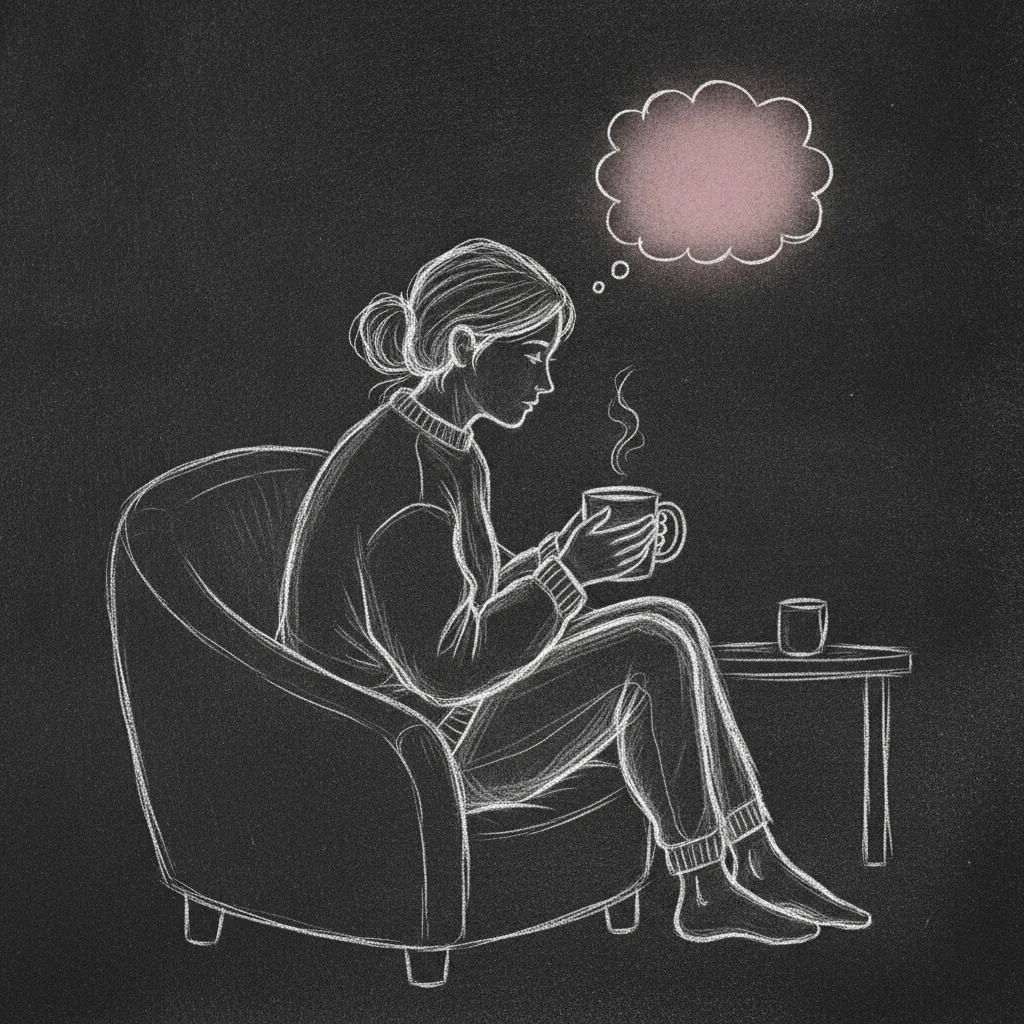
It is somewhere in the middle of the afternoon. The baby is finally asleep. The flat is quiet in that particular way that feels more like held breath than actual peace. You sit down with a cup of tea that will go cold before you finish it, and a thought arrives, the kind you would never say out loud. I do not think I am enjoying this.
You love your child. That is not in question. But love and enjoyment are not the same thing, and somewhere in the fog of the early months, you noticed a gap between the two, and it frightened you. So you typed the question into Google at 11pm, or you scrolled through Reddit threads at 2am looking for someone, anyone, who understood.
Eighty-four per cent of mothers conceal their real struggles when asked how they are doing.[6] If you searched this question, you are part of that 84 per cent. Here is why the number matters. It means the woman next to you at the baby group, the one who looks like she has it together, is almost certainly feeling the same way and saying nothing.
You are not failing. You are in the middle of something.
If the early months of motherhood have felt flat, relentless, isolating, or just deeply, confusingly unlike what you expected, you are not imagining it. You are not broken. You are not a bad mother. And the feeling does not mean you made the wrong choice.
What it means is that you are mid-transformation. Not mid-recovery. Not mid-adjustment. Mid-transformation, on the scale of adolescence, with none of the cultural scaffolding that adolescence at least tries to provide. There is a word for what is happening to you. Most people have never heard it.
The word that changes everything
In 1973, medical anthropologist Dana Raphael coined the term matrescence to describe the developmental process of becoming a mother.[1] The parallel with adolescence is not casual. Adolescence brings hormonal upheaval, identity disruption, and a fundamental reorganisation of how you see yourself and your place in the world. Matrescence does exactly the same thing. Only it happens in your thirties, without warning, in a culture that expects you to be grateful and functional within three months.
In 2017, developmental psychologist Alexandra Sacks brought the concept into wider public view, writing in The New York Times that matrescence is a real, named developmental stage that society has largely failed to acknowledge.[2] The reason so many women feel blindsided by motherhood is not weakness. The expectation that the transition should feel good, feel natural, feel joyful from the start is the problem.
“Matrescence, like adolescence, can be a time of great self-discovery, but it can also be a time of confusion and loss.”
Alexandra Sacks, The New York Times, 2017
The neuroscience adds another layer. A landmark 2017 study by Hoekzema et al., published in Nature Neuroscience, found that pregnancy produces long-lasting structural changes in the brain, specifically in the grey matter regions associated with social cognition, empathy, and threat detection. These changes persist for at least two years postpartum.[3] Your brain is, quite literally, being rebuilt. A brain undergoing structural reorganisation does not feel settled. It feels off-kilter, overwhelmed, and unfamiliar, which is precisely what so many mothers describe but cannot name.
What the research shows about how mothers actually feel
The Phoenix Report surveyed over 100 professional mothers. The findings are worth sitting with, not as statistics, but as a reflection of how widespread and unspoken this experience truly is.
That 62 per cent figure is the one I want to draw your attention to. Unlike themselves. Foreign in their own bodies. That is not depression as a clinical diagnosis, though depression can certainly be present too. It is the language of someone in the middle of a transformation they were never told was coming. Someone who lost the plot of who she was and has not yet found the plot of who she is becoming.
A note on postnatal depression and postnatal anxiety
Not enjoying motherhood is not the same as postnatal depression or postnatal anxiety, though those conditions are real and more common than most people acknowledge. If you are experiencing persistent low mood, intrusive thoughts, panic, or thoughts of harming yourself or your baby, please talk to your doctor or midwife today. What this post addresses is the broader, widely under-discussed experience of finding early motherhood harder, flatter, or more identity-disrupting than expected, without that necessarily meeting a clinical threshold. Both experiences are valid. Both deserve support.
Why is motherhood so hard?
Motherhood is hard for reasons that have very little to do with you. Three things are happening at once, and only one of them gets talked about.
The first is the work itself. Feeding, settling and broken sleep, every day, with no end of shift.
The second is matrescence. Your brain is restructuring, your hormones are recalibrating and your sense of who you are is being rebuilt. That is a developmental passage as big as adolescence, and almost nobody is told it is coming.
The third is the setting. Most mothers now do this without the village that every culture before ours took for granted, while carrying the mental load of the household and an expectation that they should be back to normal within weeks.
So if you are asking why motherhood is so hard for you, the honest answer is that it is hard for almost everyone. The difference is whether anyone has given you the words for why.
Why nobody is talking about it
The silence is not accidental. When researcher Aurélie Athan published a 2024 paper in Frontiers in Psychiatry calling for matrescence to be integrated into perinatal mental health care, one of her central arguments was that the absence of this concept from clinical frameworks leaves mothers without language for their own experience.[4] Without language, there is no conversation. Without conversation, there is only shame.
Add to that the cultural pressure of what we call bounce back culture. The pervasive, largely unexamined belief that women should return to their former selves, their former bodies, their former energy levels, and their former professional output within weeks of giving birth. Research by DeLuca and Strohacker, published in Body Image in 2025, specifically recommends replacing the language of “bouncing back” with “reclaiming,” precisely because the former sets an expectation that is medically and psychologically impossible, and causes real harm when women inevitably fail to meet it.[5]
What you can do with this right now
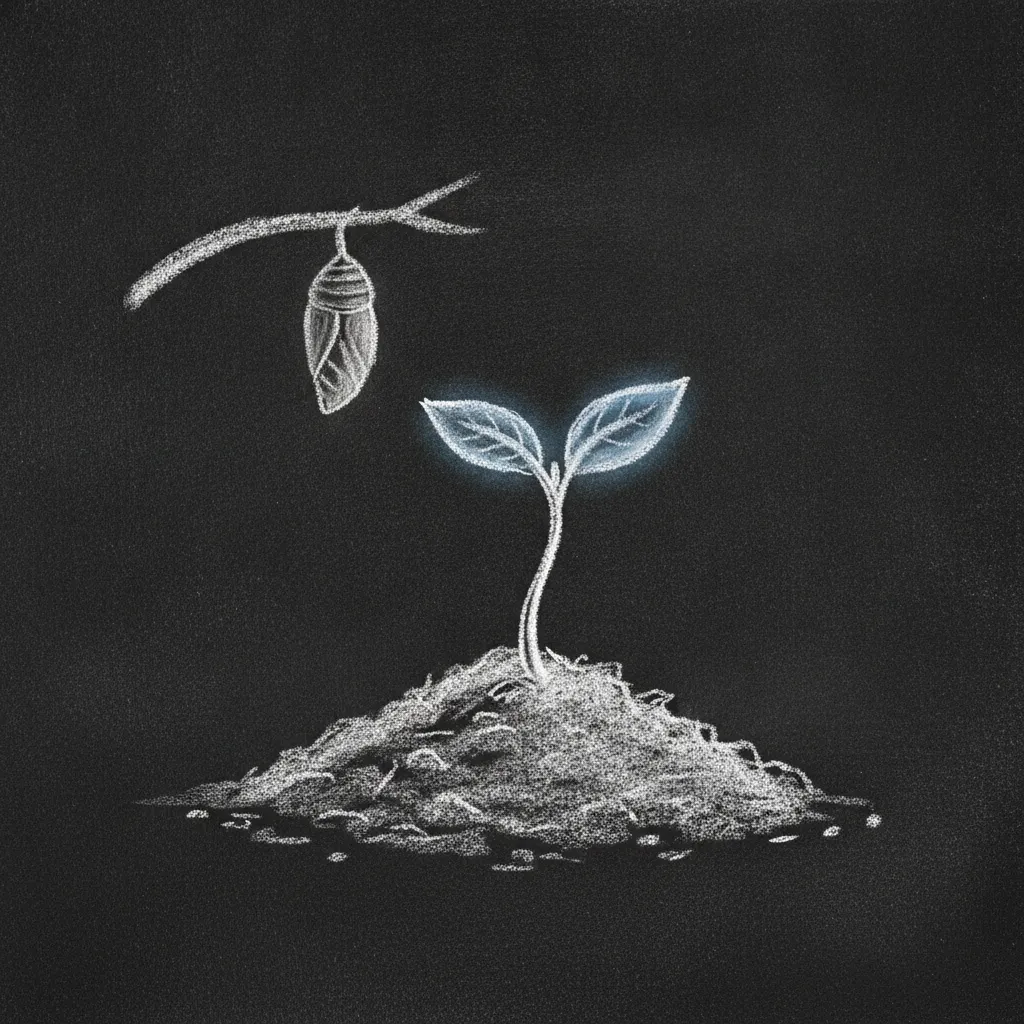
Knowing the name for what is happening does not make the 3am feeds easier. But it does change the frame, and changing the frame changes what is possible. It also helps to know that the disorientation has a shape. Three stages, roughly, that most women pass through.
Here are four places to start, right now, wherever you are in the arc.
Name it to yourself, out loud
Try saying: “I am in the middle of matrescence. My brain is restructuring. My identity is reorganising. This is not a sign that something has gone wrong.” Say it once a day for a week. The neuroscience of labelling emotions suggests that naming an experience reduces its emotional intensity in the brain’s threat-detection system. You are not being simplistic. You are working with your neurobiology.
Separate love from enjoyment, deliberately
Write down one thing you love about your child and one thing you are not enjoying about this stage. Keep them on the same page. The point is not to resolve the tension between them but to stop treating it as evidence of a problem. Both can be true. Holding both without needing to choose is a skill, and it gets easier with practice.
Find one person to tell the truth to
The 84 per cent figure is only possible because everyone is performing fine in front of everyone else. Identify one person. A partner, a friend, a doctor, a therapist, another mother you trust. Tell them the real answer to “how are you doing?” once. Not the polished version. The actual version. The relief this produces is disproportionate to the effort it takes.
Stop optimising and start observing
One of the features of high-performing women in early motherhood is the impulse to fix the experience. To read more, sleep train better, find a routine that works, optimise the chaos. Try one week of observation instead of intervention. Notice what is actually hard. Notice what is actually okay. The data you gather from honest observation is more useful than any system you could implement without it.

Frequently asked questions
Is it normal to not enjoy motherhood?
Yes. Not as an exception, but as a common feature of the early postpartum period that simply does not get talked about honestly. The research on matrescence makes clear that this transition involves real identity disruption, hormonal upheaval on a scale comparable to puberty, and grey matter restructuring in the brain that persists for at least two years. Enjoyment and love are not the same thing. You can love your child completely and find early motherhood relentlessly hard, boring at times, isolating, and identity-erasing. That combination is not a contradiction. It is the honest reality for many women who simply do not have the language or the permission to say so.
Why do I find motherhood so boring and unfulfilling?
High-achieving women often find the early months of motherhood particularly grinding, and there is a specific reason for that. Before motherhood, your sense of self was largely built around competence, progress, feedback, and intellectual stimulation. Early infant care provides almost none of those things. The work is repetitive, the feedback loop is non-existent, and the skills that made you excellent at your previous life do not translate directly. That gap between who you were and what the day now requires is real, and disorienting. It does not mean you are not cut out for motherhood. It means you are someone who has always needed challenge and meaning, and you are in a stage where both are temporarily in short supply.
Does not enjoying motherhood mean I have postnatal depression?
Not necessarily, though postnatal depression and postnatal anxiety are real conditions that affect a significant number of women and are underdiagnosed. The distinction that matters clinically is persistence, severity, and whether the feelings are interfering significantly with daily functioning. Finding early motherhood hard, flat, and identity-disrupting is a widely shared experience that does not meet the clinical threshold for postnatal depression. Persistent low mood, inability to feel any positive emotions, intrusive thoughts, or thoughts of harming yourself or your baby are different, and warrant a conversation with your doctor today.
Why does everyone else on Instagram seem to love motherhood?
They are not. They are performing the same edit you are, just in a different direction. The Phoenix Report finding that 84 per cent of mothers conceal their real struggles applies to social media at least as much as it applies to the baby group. The images you are comparing yourself to are curated by women who are experiencing the same contradictions, and choosing, for entirely understandable reasons, not to post the 2am spiralling or the afternoon when they sat on the kitchen floor and cried. They just have better lighting.
Why is motherhood so hard for me?
Because you are doing two demanding things at once. You are caring for a baby around the clock, and you are going through matrescence, a transition that reshapes your brain, body and identity. Most women are prepared for the first and told nothing about the second. Add broken sleep, a heavier mental load and a culture that expects you to bounce back, and hard is the honest word for it. It is not a sign that you are worse at this than other mothers. Most of them are finding it hard too. They are just not saying so.
Will I ever enjoy motherhood?
For most women who are in the Goo stage, the answer, with time and the right support, is yes. The matrescence framework describes three stages. The Goo (roughly 0 to 6 months), The Emerge (6 to 12 months), and The Soar (1 to 3 years). The Goo is the hardest, most disorienting, most commonly unenjoyable stage. It is not permanent. What makes the difference between getting through it and genuinely moving through it tends to be support, language, and a framework.
Sources and further reading
- 01 (1973). The Tender Gift. Breastfeeding. Prentice-Hall.
- 02 (2017). The birth of a mother. The New York Times. Link
- 03 (2017). Pregnancy leads to long-lasting changes in human brain structure. Nature Neuroscience, 20(2), 287-296. Link
- 04 (2024). A critical need for the concept of matrescence in perinatal psychiatry. Frontiers in Psychiatry, 15.
- 05 (2025). Replacing 'bouncing back' with 'reclaiming'. Reframing the postpartum body narrative. Body Image.
- 06 (2026). The Phoenix Report. Original research with over 100 professional mothers. Mabbatical. Link
Keep reading

How to not lose yourself in motherhood
You have not lost yourself. You are in the biggest identity change of your life, and nobody told you it was coming. Here is what comes next.

Maternal ambivalence: why you feel conflicting emotions after birth
Maternal ambivalence is feeling that motherhood is hard and extraordinary at once. Why both are true, and how where you point your attention changes it.