

Article
How to not lose yourself in motherhood
You typed it into Google, probably late at night. Maybe mid-feed, phone tilted so the light would not wake the baby. Maybe sitting in the car outside a supermarket, ten minutes after you had told yourself you were fine.
How to not lose yourself in motherhood.
Here is what I want you to notice about that search. The fact that you are asking it means you already feel it. The version of you who was fully herself, moving through the world with a clear sense of who she was, her pace, her opinions, the things that lit her up, she feels further away than she did six months ago. Or six weeks ago. And nothing you have tried has quite brought her back.
I am not going to tell you that you are wrong about that. You are not. Something has genuinely changed. The research is unambiguous. The person who entered motherhood and the person reading this right now are neurologically, hormonally, and psychologically different. Not slightly. Significantly.
But here is what the research is equally unambiguous about. This is not loss. It is transformation. And the two feel almost identical from the inside, which is exactly why the question you typed is the most common thing new mothers search for, and exactly why most of the answers they find are wrong.
Why “how to not lose yourself” is the wrong question
The framing of “not losing yourself” assumes that the self you had before is the one worth preserving, and that the goal is to get back to her intact. That framing feels intuitively right. But it is not what the science describes, and it is not what the women who have come through this actually report on the other side.
What is actually happening has a name. Matrescence. The term was coined by medical anthropologist Dana Raphael in 1973 and describes the neurological, psychological, hormonal, and identity transformation that occurs when a woman becomes a mother.[4] Raphael deliberately paralleled it to adolescence, because the scale of the change is comparable.
Nobody asks a teenager how to not lose herself
You do not ask a teenager “how do I not lose myself during puberty?” The question does not make sense. Not because the change is not real, but because the self that comes out the other side is not a lesser version of the one that went in.
The more accurate question, and the more useful one, is this. How do I carry the parts of myself that matter through this transition, and how do I recognise the self that is emerging?
“Matrescence involves the reorganisation of a woman’s entire psychological structure, not just her role or schedule. It is not a temporary adjustment. It is a developmental event.”
Dr Aurélie Athan, Columbia University, Frontiers in Psychiatry, 2024
What is actually happening to you right now
In 2017, Dr Elseline Hoekzema and her team at Leiden University published landmark research in Nature Neuroscience confirming that pregnancy causes long-lasting, measurable changes in the structure of the brain. Specifically, regions associated with social cognition, empathy, and the processing of other people’s needs show lasting changes that were still present two years after birth.[1]
This is not metaphor. The brain you are using to construct your sense of self right now is structurally different from the brain you had three years ago. Which means when you say “I do not feel like myself,” you are reporting something clinically precise. The architecture of the self has been rebuilt.
You are not broken. You are going through a documented developmental transition, without the language or the support that transition demands.
For the stages of that transition, the figures on how common this feeling is, and where you sit on the arc, read Is it normal not to enjoy motherhood?. This post is about what to do once you have the map.
Is this a postpartum identity crisis?
If you have searched for “postpartum identity crisis”, you are not being dramatic. The phrase captures something real. Who you were, what you valued and how you spent your days have all shifted at once, usually without warning and without a name.
But “crisis” suggests something has broken. Matrescence suggests something is being built. The disorientation is the middle of a developmental passage, as significant as adolescence and just as uncomfortable while it is happening.
Part of what you are feeling is grief. Grief for the woman who could leave the house in thirty seconds, who knew what she thought, who recognised her own life. That grief is legitimate, and naming it helps. Maternal ambivalence: why you feel conflicting emotions after birth explores the research on it. What follows here is what to do next.
Five things that actually help
Most advice on “not losing yourself in motherhood” tells everyone the same thing regardless of whether they are three weeks postpartum or three years. The following are sequenced to match what tends to work at different points in the transition.
1. Replace the verdict with a location
The moment you replace “I have lost myself” with “I am in the middle of matrescence” you change your relationship to the experience. One is a verdict. The other is a location on a map, with a route out. Say it to yourself. Say it to someone else. Language is not just description. It is a framework that makes the next step possible.
2. Ask what you loved before you were afraid of not being enough
Not what fits into nap times. Not what makes you a better mother. What actually lit something up in you before the question of whether you were good enough started taking up that space. Write it down. You do not have to act on it yet. You just have to remember it exists. That remembering is not nostalgia. It is reconnaissance.
3. Notice where she is already showing up uninvited
The old you has a habit of appearing in small moments. A piece of music that stops you mid-task. A conversation where you are suddenly sharp and entirely yourself. A flash of certainty about something you care about. These are not remnants. They are the parts of you that were preserved through the transition, already present in your new architecture. Pay attention to them. They are telling you something about where you are heading.
4. Protect the thread, not the self-care
There is a version of “self-care” that lives at the level of a nice-to-have. Face masks, herbal tea, the odd bath. When the week gets hard, it is the first thing to go.
There is a different frame that survives the difficult week. Identity maintenance. One thing, each week, that belongs entirely to you and connects you to the woman who existed before she became someone’s mother. Not exercise because you should. Not a coffee that turns into a logistics call. Something that would not exist unless she was still in there.
Frame it as infrastructure. Not indulgence. Infrastructure does not get cancelled.
5. Stop waiting to feel ready before you act like yourself
One of the most consistent patterns in matrescence research is waiting for the feeling of certainty to return before doing the things that used to define you. The evidence points the other way. Action precedes feeling.
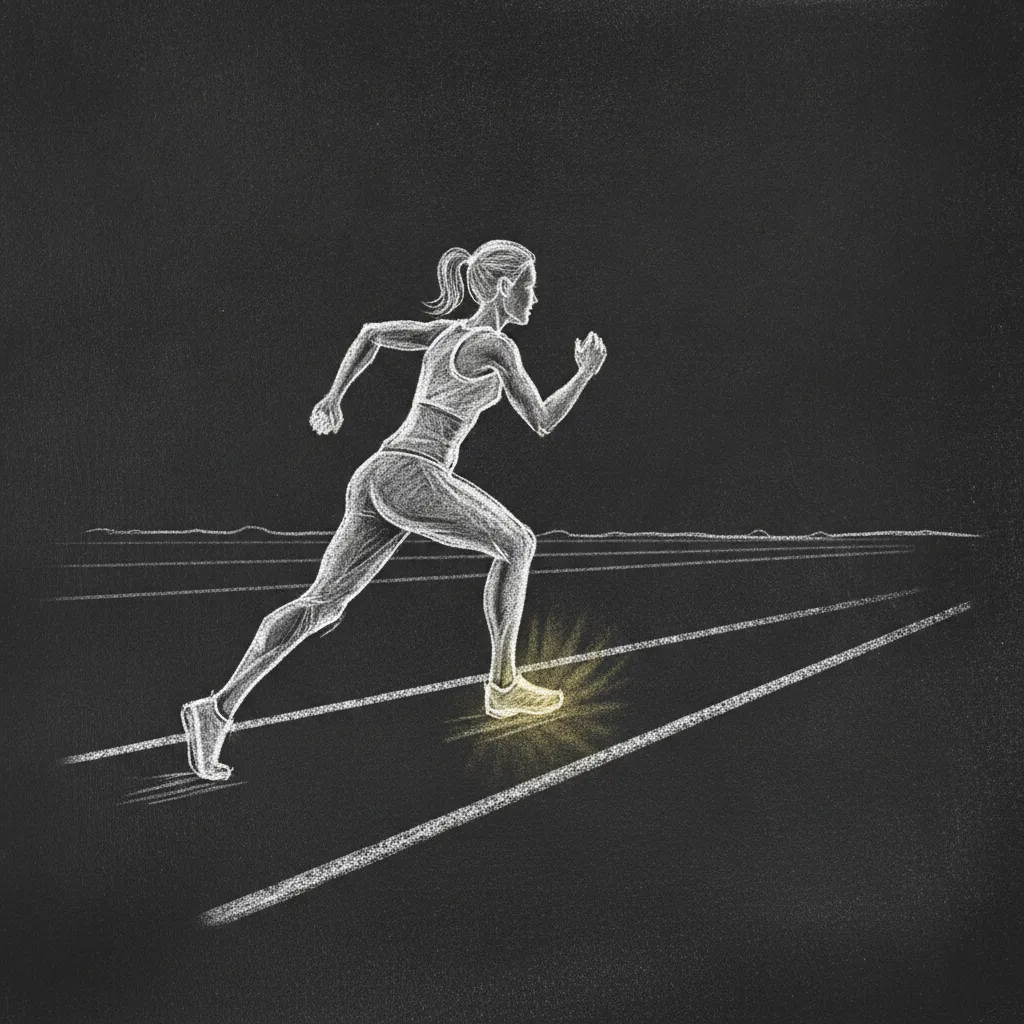
You do not wait to feel like a runner before you run. You run, and the feeling follows. The same is true here. You will not wake up feeling like yourself and then do the things she did. You will do the things she did, and the feeling will catch up.
This is the action that most consistently unlocks the others.
What you are actually building
The most powerful reframe in the research on matrescence is not that you will find yourself again. It is that the self you find will be a more capable version than the one who went in.
A 2023 review by Orchard et al. in Trends in Cognitive Sciences documented that the postpartum brain changes associated with matrescence include enhanced social cognition, heightened threat detection in service of the infant, and increased capacity for rapid, complex decision-making under pressure.[3] These changes persist long after the infant phase is over.
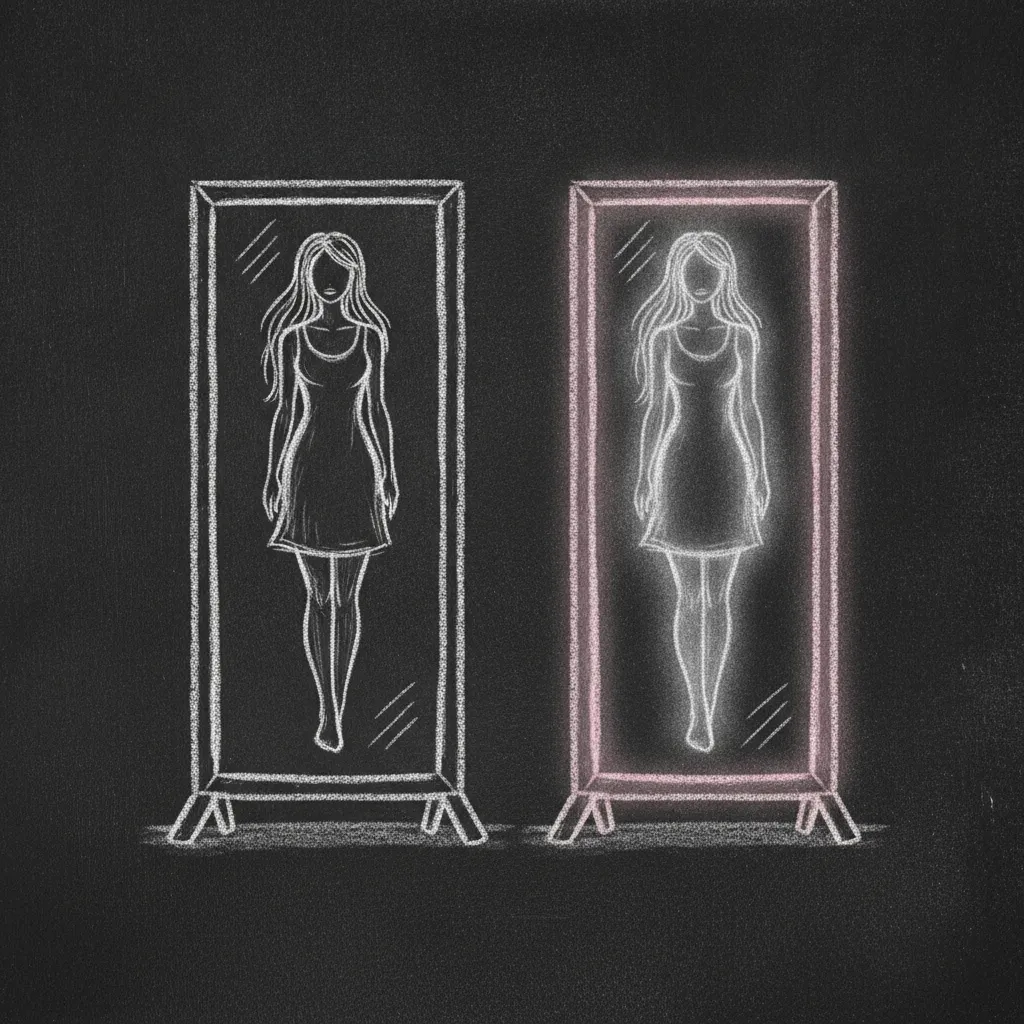
The woman who comes through matrescence intact, with her ambition, her intelligence, her relationships, and her sense of self carried forward through the transition, is not the woman who went in, restored. She is something that did not exist before. More precise about what she values. More honest about what she will and will not accept. More capable in ways that are not yet fully visible from inside the chrysalis.

Frequently asked questions
How do I find myself again after having a baby?
The most useful reframe is to stop searching for the old self and start noticing where the new one is already present. Look for moments when you are unambiguously yourself. Sharp in a conversation, moved by something, laughing without effort. These are not remnants. They are structural survivors of the matrescence transition, already present in who you are becoming. Practically, protect one thing each week that belongs entirely to you. Not exercise because you should. Not a call that turns logistical. Frame it as identity maintenance rather than self-care. That framing makes it non-negotiable rather than optional.
Will I ever feel like myself again after having a baby?
Yes. Though not identically to your pre-baby self. The core of who you are, your values, your intelligence, your ambitions, your particular way of caring about things, does not dissolve in the transition. It is restructured. The disorientation of the early postpartum period is the experience of being mid-rebuild, not the experience of being erased. Women on the other side of matrescence often describe feeling more themselves than before, not less. More precise about what they value, more honest about what they will not accept, more capable in ways that were not available to them before the transition. The destination is not a return. It is an expansion.
How long does it take to feel like yourself again after having a baby?
The honest answer is that matrescence is not a phase with a fixed end date. The neurological changes documented by Hoekzema and colleagues persist for at least two years. The identity reorganisation does not follow a predictable timeline. What consistently shortens the duration of the most disorienting part is not time alone but three things. Naming the experience correctly. Having at least one relationship where the real version of it can be spoken. Taking small, deliberate actions that maintain the thread of your identity through the transition.
I feel like I have lost myself in motherhood. Is that normal?
Yes. It is one of the most common things mothers say, and one of the least talked about. Matrescence reorganises your brain, your priorities and your sense of who you are, all at once. Feeling lost in the middle of that is not a sign that something has gone wrong. It is a sign that something big is happening. The self you are looking for has not gone. It is being rebuilt, and you can take part in the rebuild.
Is losing yourself in motherhood the same as postpartum depression?
They are different things, though they can coexist. The identity disorientation of matrescence is a normal and documented feature of the transition into motherhood. It does not, on its own, indicate a clinical condition. Postpartum depression involves a distinct cluster of symptoms. Persistent low mood, inability to experience pleasure, feelings of worthlessness or hopelessness, changes in sleep and appetite beyond what newborn care explains. If you are experiencing those symptoms alongside identity disorientation, please speak to your doctor or midwife. The two can coexist, and one does not cancel out the other.
Sources and further reading
- 01 (2017). Pregnancy leads to long-lasting changes in human brain structure. Nature Neuroscience, 20(2), 287-296. Link
- 02 (2024). A critical need for the concept of matrescence in perinatal psychiatry. Frontiers in Psychiatry, 15.
- 03 (2023). Matrescence. Lifetime impact of motherhood on cognition and the brain. Trends in Cognitive Sciences, 27(3), 302-316. Link
- 04 (1973). The Tender Gift. Breastfeeding. Prentice-Hall.
- 05 (2017). The birth of a mother. The New York Times. Link
Keep reading

Is it normal not to enjoy motherhood?
Yes, it is common. 84 per cent of mothers hide their real struggles when asked how they are. What that number says about what you are going through.

Maternal ambivalence: why you feel conflicting emotions after birth
Maternal ambivalence is feeling that motherhood is hard and extraordinary at once. Why both are true, and how where you point your attention changes it.