

Article
The best parenting books for the early years: my top 5 (and one more)
One day your baby is asleep on your chest. The next they are standing on a chair, testing every rule you have. Each stage arrives before you have caught up with the last one.
A good book helps you keep up. One author follows one line of thought all the way through, and it is still there when you have five minutes to come back to it.
You also do not need fifty of them. You need a few, in the order your child grows into them.
So these are my picks: my top five, in reading order, plus one more for when your child starts talking. The order is not a ranking. It follows your child’s age, from pregnancy into the toddler years. I trained in Montessori, so two of the five come from that tradition. There are no affiliate links.
Short on time? Where to start matches a book to your child’s age.
These are books about your child. For books about you and becoming a mother, see my other reading list.
Knowing your child, knowing yourself
Maria Montessori had a name for what a newborn is looking for: points of reference. Signs that the world is safe and welcoming, and that they belong in it. Their mothers are the first place they look.
In Montessori, three elements make up the picture: the child, the prepared environment and the prepared adult. The prepared adult knows about the child: their reflexes, their needs, their human tendencies. She knows how to set up a home that responds to what her baby is ready for. And she knows herself: her postpartum body, her changing hormones.
That makes two shelves. Knowing yourself sits at the centre of matrescence, the passage of becoming a mother. My books on matrescence and becoming a mother cover that shelf. This list covers the other one: knowing your child.
You do not have to fill both at once. Start with the shelf you need right now.
Pregnancy and the first year
Three books for the year your baby is new. The practical one comes first. The other two take you deeper.
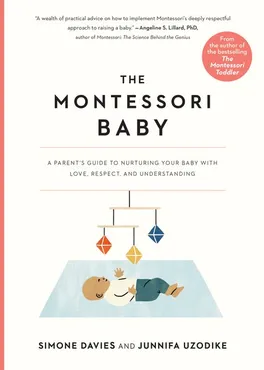
The Montessori Baby, by Simone Davies and Junnifa Uzodike
The full title is The Montessori Baby: A Parent’s Guide to Nurturing Your Baby with Love, Respect, and Understanding (Workman, 2021). Its publisher says it shows how to raise your baby from birth to age one “with love, respect, insight, and a surprising sense of calm”, with hundreds of practical ideas.[1]
Simone Davies is an AMI (Association Montessori Internationale) Montessori teacher and the author of The Montessori Toddler. Junnifa Uzodike is an AMI-trained Montessori educator. She founded and leads Fruitful Orchard Montessori School in Abuja, Nigeria. Library Journal described the book as “A book that advocates a simple environment with less stuff, less fuss, and a slower speed of life.”[1]
It comes first because you can start using it before your baby arrives.
Read it if you want calm, everyday ideas for life with a new baby.
When: in pregnancy, while you get your home ready, and right through the first year.
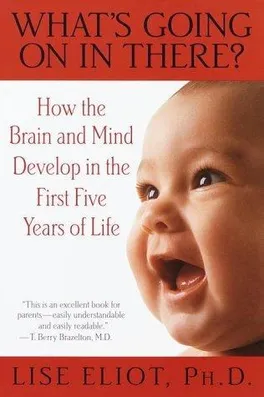
What’s Going On in There?, by Lise Eliot
The full title is What’s Going On in There? How the Brain and Mind Develop in the First Five Years of Life (Bantam, 1999). Lise Eliot, PhD, is a professor of neuroscience at Chicago Medical School, Rosalind Franklin University. She also wrote Pink Brain, Blue Brain. In the UK the book was published by Penguin as Early Intelligence, so look for either title.[2]
As its subtitle says, it follows how a child’s brain and mind develop over the first five years. The Montessori Baby gives you something to try on an ordinary morning. This one explains what is happening underneath.
Your brain is changing in these years too. Here is what actually happens in a mother’s brain.
Read it if you like to know the why behind the how.
When: from pregnancy, then as a reference until your child turns five.
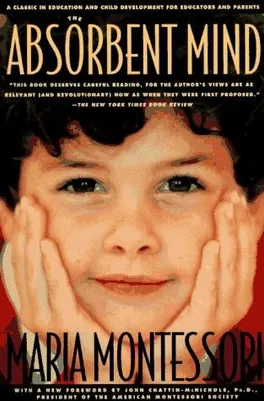
The Absorbent Mind, by Maria Montessori
This is where the ideas in The Montessori Baby began. The Absorbent Mind was first published in 1949 by the Theosophical Publishing House in Madras, India.[3] It is based on lectures Montessori gave in Ahmedabad, India.[4]
Maria Montessori was born in Italy in 1870. In 1896 she became one of the first female doctors in Italy. She went to India in 1939 and stayed for nearly seven years.[5]
The book is her account of the young child, from birth to six. Its title names her central idea. In Montessori’s view, a baby has a special kind of mind, which she called the absorbent mind. It takes in everything unconsciously, and builds the baby’s understanding of the world around them.
It is a book of lectures. Read it slowly, a few pages at a time.
Read it if *The Montessori Baby* leaves you wanting to know where its ideas came from.
When: once you have started *The Montessori Baby*, at any point in the first year.
The toddler years
Two books for when your baby is walking, wanting and testing.
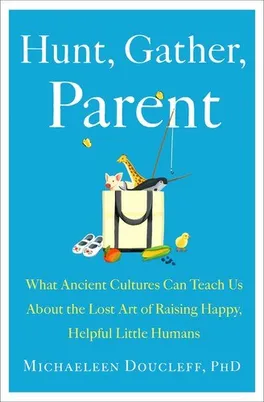
Hunt, Gather, Parent, by Michaeleen Doucleff
In Hunt, Gather, Parent (Avid Reader Press, 2021), Michaeleen Doucleff travels with her three-year-old daughter. Together they spend time with Maya families in Mexico, Inuit families in the Arctic and Hadzabe families in Tanzania.[6] She watches how parents there raise their children.
Doucleff has a PhD in physical chemistry. She spent a decade in the lab, then became a science reporter at NPR. Her site describes the book as a New York Times bestseller, translated into 30 languages.[7]
If the contrast between cultures stays with you, read my piece on how Western culture treats the months after birth next.
Read it if you want to see how families in other parts of the world raise their toddlers.
When: the toddler years, though some ideas start earlier.
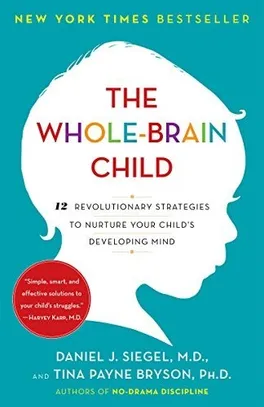
The Whole-Brain Child, by Daniel J. Siegel and Tina Payne Bryson
The full title is The Whole-Brain Child: 12 Revolutionary Strategies to Nurture Your Child’s Developing Mind (Delacorte, 2011). Dan Siegel, MD, is the executive director of the Mindsight Institute and founding co-director of the Mindful Awareness Research Center at UCLA. Tina Payne Bryson, PhD, is his co-author. Its publisher says there are more than 2 million copies in print.[8]
The book gives you twelve strategies, built on simple pictures of the developing brain, for the moments when feelings get big. Kirkus wrote that the authors “offer useful parental tools that can limit temper tantrums”. It called the book a “Useful child-rearing resource for the entire family.”[9]
Read it if tantrums are arriving and you want to understand them, not just stop them.
When: once your child starts to talk.
One more, for when they start talking
Your baby is learning how to communicate, and you are learning how to listen. You don’t have to decode every cry perfectly.
That learning does not stop when the words arrive. This bonus book is for that stage.
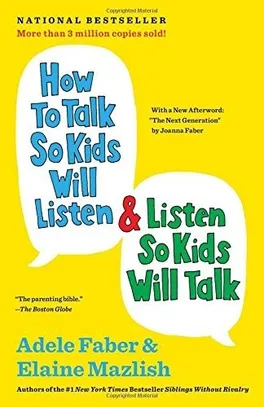
How to Talk So Kids Will Listen & Listen So Kids Will Talk, by Adele Faber and Elaine Mazlish
This book was published by Rawson, Wade in New York in 1980.[10] Adele Faber, a former high school teacher, and Elaine Mazlish went to the parenting lectures of Haim Ginott. They joined for an eight-week course and stayed for ten years, as the Boston Globe recalled.[11]
Their parenting guides have sold more than four million copies in North America alone, according to The New York Times.[11]
Read it if you want words ready for the moment your child is upset and you are tired.
When: from the time your child starts talking, and for years after.
Where to start
- If you are pregnant: The Montessori Baby.
- If you have a new baby: The Montessori Baby, then Lise Eliot’s What’s Going On in There?.
- If Montessori has caught your interest: The Montessori Baby, then The Absorbent Mind.
- If you have a toddler: Hunt, Gather, Parent and The Whole-Brain Child.
- If your child is starting to talk: Faber and Mazlish.
- If you want books about your own transition: the matrescence list.
This shelf reaches beyond Britain and America. The Absorbent Mind was first published in India. Junnifa Uzodike leads a school in Abuja, Nigeria. Doucleff’s travels take her to Hadzabe families in Tanzania.
No book will make you a perfect mum. That was never its job.
Your child isn’t being shaped by one tantrum, one impatient moment, or one mistake. They’re being shaped by thousands of ordinary moments where you keep showing up with love.
So choose the one book that fits the stage you are in. Leave the rest on the shelf until your child grows into them.
One stage. One book.
If you would rather notice than read for a while, Part 2: Baby of The RISE Journals is about understanding your baby: what your baby is experiencing, and how to trust what you notice. It is printable. All it asks for is ten minutes and a pen.
Frequently asked questions
What are the top 5 parenting books?
There is no single answer for every family. My top five for the early years, in reading order, are The Montessori Baby by Simone Davies and Junnifa Uzodike, What's Going On in There? by Lise Eliot, The Absorbent Mind by Maria Montessori, Hunt, Gather, Parent by Michaeleen Doucleff and The Whole-Brain Child by Daniel J. Siegel and Tina Payne Bryson. For when your child starts talking, add How to Talk So Kids Will Listen & Listen So Kids Will Talk by Adele Faber and Elaine Mazlish.
When should I start reading parenting books?
In pregnancy, if you have the time and the interest. The Montessori Baby covers birth to age one, so pregnancy is a good moment to start it and get your home ready. The toddler books can wait until you have a toddler.
Are Montessori books useful if my child will not go to a Montessori school?
The Montessori Baby is written for parents. Its subtitle calls it a parent's guide, and its publisher describes hundreds of practical ideas for life from birth to age one. I trained in Montessori, and I use Montessori principles in raising my own children. The prepared adult is an idea about you as a parent: knowing your child and knowing yourself. Take the ideas that fit your home and your family.
Which parenting book should I read first?
The one for the stage you are in. If you are pregnant or have a new baby, start with The Montessori Baby. If you have a toddler, start with Hunt, Gather, Parent or The Whole-Brain Child. If your child is talking, start with Faber and Mazlish.
Is What's Going On in There? sold under another title?
Yes. In the UK it was published by Penguin as Early Intelligence. In the US it is What's Going On in There? How the Brain and Mind Develop in the First Five Years of Life (Bantam, 1999).
Sources and further reading
- 01 (2021). The Montessori Baby: A Parent's Guide to Nurturing Your Baby with Love, Respect, and Understanding, by Simone Davies and Junnifa Uzodike. Workman, 2021. Book description, author biographies and the Library Journal quotation. Link
- 02 (n.d.). Lise Eliot, PhD, Professor of Neuroscience. Faculty page listing What's Going On in There? (Bantam, 1999) and its UK title, Early Intelligence (Penguin). Link
- 03 (1949). The Absorbent Mind. Theosophical Publishing House, Madras. Open Library record. Later editions include Holt, Rinehart and Winston, New York, 1967, translated from the Italian by Claude A. Claremont. Link
- 04 (n.d.). The Absorbent Mind. Notes that the book is based on lectures given by Dr Montessori at Ahmedabad, India. Link
- 05 (n.d.). Maria Montessori biography. Her birth in Chiaravalle, Italy (1870), her qualification as one of the first female doctors in Italy (1896) and her years in India from 1939. Link
- 06 (2021). Hunt, Gather, Parent. Book page on the author's site. Published by Avid Reader Press / Simon & Schuster, 2021. Link
- 07 (n.d.). About. The author's background, and the book's bestseller and translation details. Link
- 08 (2011). The Whole-Brain Child: 12 Revolutionary Strategies to Nurture Your Child's Developing Mind, by Daniel J. Siegel, MD, and Tina Payne Bryson, PhD. Author biographies and book description. First published by Delacorte Press, 2011; Bantam paperback, 2012. Link
- 09 (2011). The Whole-Brain Child by Daniel J. Siegel and Tina Payne Bryson. Review, 1 October 2011. Link
- 10 (1980). How to Talk So Kids Will Listen & Listen So Kids Will Talk. Rawson, Wade, New York. Open Library record. Link
- 11 (2024). Adele Faber, who helped change how parents talk to children, dies at 96. 26 May 2024. On the authors and Haim Ginott's lectures, including the eight-week course they joined. The sales figure is not on this page: it is from The New York Times, as quoted in Shelf Awareness, 3 June 2024. Link
Keep reading

Depleted mother syndrome and mum burnout: signs, causes and recovery
Depleted mother syndrome is not a diagnosis, but the exhaustion is real. The signs, how it differs from postnatal depression, and what actually helps.

Postpartum rage: why it happens and how long it lasts
Sudden, intense anger after a baby is not a character flaw. Why postpartum rage happens, how long it lasts and when to speak to your doctor or midwife.