
Article
The best books on matrescence and becoming a mother
It’s the middle of the night and you are wide awake again. The baby is finally asleep on you. You reach for your phone and type something like “why do I feel like a different person”.
You do not need another list of tips at that hour. You need an explanation.
What would have helped me more was someone handing me the research and saying, here is what is actually happening to you. It has a name and you are not losing your mind. The word is matrescence.
It took me three children to finally discover the word I wish someone had given me before I had my first baby. So this is the shelf I would hand you instead.
These are my picks: nine books about you and the passage of becoming a mother. Every entry tells you what the book is, who wrote it, who it suits and when to pick it up. If you only have time for one, the Where to start section near the end will help you choose. For books about your child, see my top five parenting books for the early years.
Becoming a mother
These nine books are about the mother. Some hand you the science. Some hand you the history. Some help you feel your way through it.
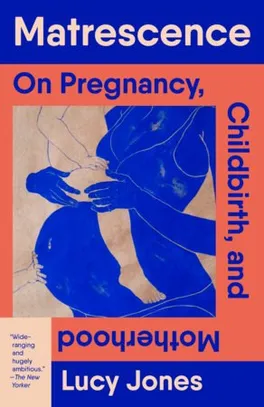
Matrescence, by Lucy Jones
Search for “the matrescence book” and this is the one that comes up. Lucy Jones is a journalist based in Hampshire, and she mixes her own story with reporting from neuroscience, evolutionary biology, psychoanalysis, sociology and ecology.[1] The chapters move through birth, the brain, sleep and society.
It has two titles, which can be confusing. In the UK it is Matrescence: On the Metamorphosis of Pregnancy, Childbirth and Motherhood (Allen Lane, 2023; Penguin paperback, 2024). In the US it is Matrescence: On Pregnancy, Childbirth, and Motherhood (Pantheon, 2024; Vintage paperback, 2026).[2] It is the same book. Look for whichever edition your country stocks.
It was longlisted for the 2024 Women’s Prize for Non-Fiction.[3] Reviewing it in the Guardian, Rhiannon Lucy Cosslett called it “a boundary-pushing book”.[4] If you want to know what is happening in your brain specifically, my post on what mum brain actually is sits well alongside it.
Read it if you want the science and the story in one place.
When: in pregnancy or after. It includes detailed birth stories, so some readers choose to keep it for after the birth. Either is fine.
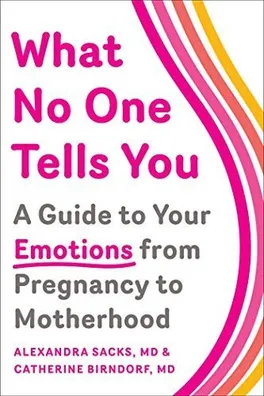
What No One Tells You, by Alexandra Sacks and Catherine Birndorf
The full title is What No One Tells You: A Guide to Your Emotions from Pregnancy to Motherhood (Simon & Schuster, 2019). It is written by two reproductive psychiatrists.[5] It walks you through the emotional side of becoming a mother, from pregnancy onwards. It also explains why this passage can be as stressful and transformative as adolescence.
It is a good companion if your feelings about motherhood do not match the pictures. Here is more on holding two feelings at once.
Read it if you want to understand your feelings, and why they make sense.
When: from pregnancy. If low mood feels heavier than ordinary tiredness, speak to your doctor or midwife.
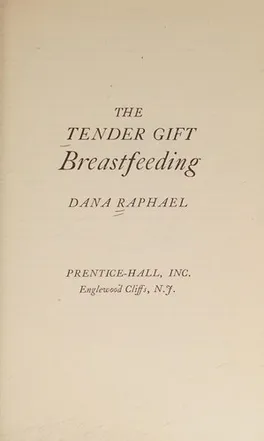
The Tender Gift: Breastfeeding, by Dana Raphael
This is the book where the word matrescence appears. Dana Raphael was an American anthropologist, and The Tender Gift: Breastfeeding (Prentice-Hall, 1973) grew out of her doctoral research at Columbia. In it she gives the transition a name, matrescence, to put the emphasis on the mother.[6] It is the earliest use we could find. Dr Aurélie Athan, a clinical psychologist at Teachers College, Columbia University, describes it as the term first coined by Raphael in 1973.[7]
Two years later, she edited a collection called Being Female (1975). Her own chapter in it has a title that begins “Matrescence, Becoming a Mother”.
The book itself is about breastfeeding across cultures, so read it for the history. I tell that story in the word that should have changed everything in 1973.
Read it if you want to see where the word began.
When: any stage.
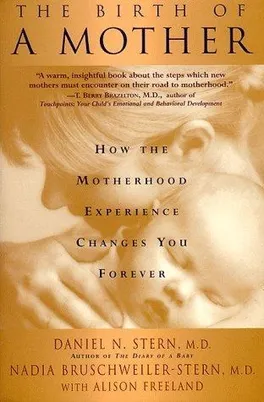
The Birth of a Mother, by Daniel N. Stern and Nadia Bruschweiler-Stern, with Alison Freeland
The Birth of a Mother: How the Motherhood Experience Changes You Forever (BasicBooks, 1998) is about what its subtitle says: how becoming a mother changes you.[8] After Raphael’s, it is the oldest book in this half. Daniel Stern also wrote The Motherhood Constellation (1995).
Read it if you want the psychological roots of the conversation.
When: pregnancy or the first year.
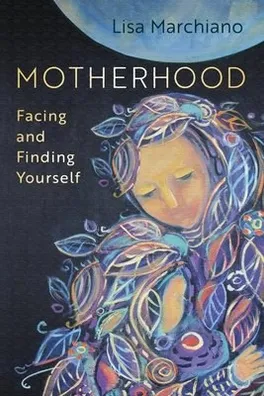
Motherhood: Facing and Finding Yourself, by Lisa Marchiano
Lisa Marchiano is a Jungian analyst in Philadelphia. Motherhood: Facing and Finding Yourself (Sounds True, 2021) reads motherhood through fairy tales and myth.[9]
If that framing speaks to you, read what happens to your sense of self in motherhood too.
Read it if you think in stories and symbols more than in studies.
When: the first year onwards.
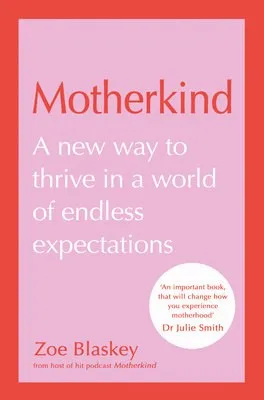
Motherkind, by Zoe Blaskey
Zoe Blaskey is a coach, the founder of Motherkind and the host of its podcast. Motherkind (HQ, 2024) draws on her coaching tools, her podcast guests and stories from the Motherkind community.[10] It covers guilt, emotions and why boundaries may serve you better than chasing balance.
If the voice in your head is harsh, read it next to turning your inner critic into an inner coach.
Read it if you want practical support you can use this week.
When: the first year onwards.
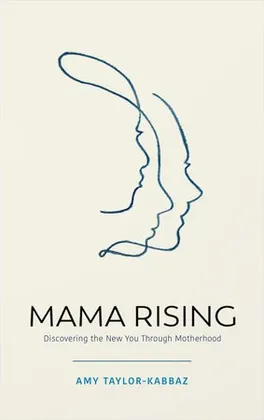
Mama Rising, by Amy Taylor-Kabbaz
Mama Rising: Discovering the New You Through Motherhood (Hay House, 2020) is by Amy Taylor-Kabbaz, a former journalist.[11] That background sent her looking for what the research says about matrescence. The book mixes that research with interviews with experts and case studies.
Read it if you want warmth and research together, told by someone who went looking for answers.
When: the first year onwards.
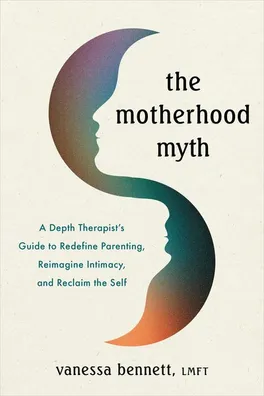
The Motherhood Myth, by Vanessa Bennett
The full title is The Motherhood Myth: A Depth Therapist’s Guide to Redefine Parenting, Reimagine Intimacy, and Reclaim the Self (St. Martin’s Essentials / Sounds True, 2025). Vanessa Bennett is a depth psychotherapist in Los Angeles.[12] She uses archetypes and the idea of initiation, and she asks questions about intimacy, consent and connection.
It is one of the few books here that looks closely at your relationship. Your partner is going through a change too: here is more on patrescence.
Read it if motherhood has shaken up your relationship and your sense of self at the same time.
When: the first year onwards.
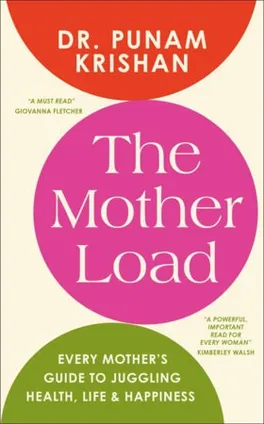
The Mother Load, by Dr Punam Krishan
The Mother Load: Every Mother’s Guide to Juggling Health, Life & Happiness (DK, 2026) is by Dr Punam Krishan, an NHS doctor in Glasgow.[13] It is about your own health. It starts with the overwhelming first weeks and runs through the toddler years and beyond.
For the hormonal side of the early months, see what your postpartum hormones are doing.
Read it if your own health has slipped to the bottom of the list.
When: after the birth, and dip back in as your child grows.
And when you are ready to understand your child
Knowing your child is part of becoming their mother too.
I trained in Montessori. From their very first breath, babies are searching for what Maria Montessori called points of reference. We, their mothers, are their first and most important ones.
In Montessori, the adult is part of the picture too: the prepared adult. That is an adult who knows about the child, and who knows herself: her postpartum body, her changing hormonal structure. The books above help you know yourself. For the other half, knowing your child, read my top five parenting books for the early years.
Where to start
You do not need all nine. Start with the one that fits where you are now.
- If you are pregnant: What No One Tells You by Sacks and Birndorf.
- If you have a new baby: Motherkind or Mama Rising.
- If you want the science: Lucy Jones’s Matrescence.
- If you want the history: Dana Raphael’s The Tender Gift, then The Birth of a Mother by Stern and Bruschweiler-Stern.
- If your own health has slipped: The Mother Load by Dr Punam Krishan.
- If you want to understand your child: my top five parenting books.
A note on origins. Most of these books come from the UK and the US. Wherever you are reading from, take what fits your life and leave the rest.
You will not find hours to read. Not this year. So do not wait for them.
Pick up a book. Set a timer. Read for 10 minutes.
Ten minutes tonight. One chapter this week.
You were never meant to work this out alone. The research is already written.
When you are ready to write rather than read, The RISE Journals are four printable journals that take you through matrescence one prompt at a time. Ten minutes and a pen is enough. Start with Part 1: Self.
Frequently asked questions
What is the best book about matrescence?
It depends on what you need. For science and story together, start with Matrescence by Lucy Jones. For your emotions, from pregnancy onwards, try What No One Tells You by Alexandra Sacks and Catherine Birndorf. For the history of the word, go to Dana Raphael's The Tender Gift: Breastfeeding (1973).
When should I read Matrescence by Lucy Jones?
In pregnancy or after the birth. Both work. The book includes detailed birth stories, so some readers prefer to keep it for after the birth. If birth stories worry you right now, it is fine to wait.
Is Matrescence by Lucy Jones the same book in the UK and US?
Yes. In the UK it is Matrescence: On the Metamorphosis of Pregnancy, Childbirth and Motherhood (Allen Lane, 2023). In the US it is Matrescence: On Pregnancy, Childbirth, and Motherhood (Pantheon, 2024). The subtitle and publisher differ, and the UK edition came out first.
Who first used the word matrescence?
The American anthropologist Dana Raphael. The word appears in her 1973 book The Tender Gift: Breastfeeding, the earliest use we could find. In 1975 she published a chapter whose title begins "Matrescence, Becoming a Mother". Dr Aurélie Athan, a clinical psychologist at Teachers College, Columbia University, describes it as the term first coined by Raphael in 1973.
Are there books about matrescence to read in pregnancy?
Yes. What No One Tells You by Sacks and Birndorf is organised from pregnancy onwards. The Birth of a Mother by Stern and Bruschweiler-Stern also suits pregnancy. Lucy Jones's Matrescence also works in pregnancy, though some mums prefer to read it after the birth.
Sources and further reading
- 01 (2024). Matrescence: On the Metamorphosis of Pregnancy, Childbirth and Motherhood, by Lucy Jones. UK edition details and publisher description. First published by Allen Lane, 2023; Penguin paperback, 2024. Link
- 02 (2024). Matrescence: On Pregnancy, Childbirth, and Motherhood, by Lucy Jones. US edition details: Pantheon hardcover, 2024; Vintage paperback, 2026. Link
- 03 (2024). Matrescence by Lucy Jones. Longlisted for the Women's Prize for Non-Fiction 2024. Link
- 04 (2023). Matrescence by Lucy Jones review: the birth of a mother. The Guardian, 29 June 2023. Link
- 05 (2019). What No One Tells You: A Guide to Your Emotions from Pregnancy to Motherhood. Book page on Dr Alexandra Sacks's site. Published by Simon & Schuster, 2019. Link
- 06 (1973). The Tender Gift: Breastfeeding. Prentice-Hall. Open Library record; a scanned copy is at archive.org/details/tendergiftbreast0000raph. Her chapter "Matrescence, Becoming a Mother" appears in Raphael, D. (ed.) (1975), Being Female: Reproduction, Power, and Change, Mouton. Link
- 07 (n.d.). Matrescence. Dr Athan's account of Dana Raphael's work and the term's origin. Link
- 08 (1998). The Birth of a Mother: How the Motherhood Experience Changes You Forever. BasicBooks. Open Library record. Link
- 09 (2021). Motherhood: Facing and Finding Yourself. Sounds True. Open Library record. Link
- 10 (2024). Motherkind. HQ (HarperCollins). Open Library record. Link
- 11 (2020). Mama Rising: Discovering the New You Through Motherhood, by Amy Taylor-Kabbaz. Publisher page and book description. Link
- 12 (2025). The Motherhood Myth: A Depth Therapist's Guide to Redefine Parenting, Reimagine Intimacy, and Reclaim the Self, by Vanessa Bennett. St. Martin's Essentials / Sounds True. Publisher page. Link
- 13 (2026). The Mother Load: Every Mother's Guide to Juggling Health, Life & Happiness, by Dr Punam Krishan. Author biography and book description. Published in the UK by DK, 2026. Link
Keep reading
How matrescence is like adolescence, and how it isn't
Matrescence is often compared to adolescence. What brain scans of mothers and teens show, where the comparison breaks, and does pregnancy shrink your brain?

Mum guilt: where it comes from and how to let go
Mum guilt (or mom guilt) is not a verdict on you. Where it comes from, how it differs from shame, the research on working mums, and how to let go.